Brusly Sewer Project Faces Weather Setbacks as Year-End Deadline Approaches
BRUSLY — Spinks Construction's polishing reactor project hit another obstacle this week after heavy rains filled the construction site with mud, though the contractor has resolved a longstanding bridge access issue by replacing damaged support pilings at his own expense.
The contractor has until the end of December to complete the final component of the $3.6 million sewer lagoon project.
Bridge Repairs Remove Major Obstacle
The bridge weight limitation that sparked a controversial $70,000 change order earlier this year appears to be resolved — but not without raising new questions about liability and documentation.
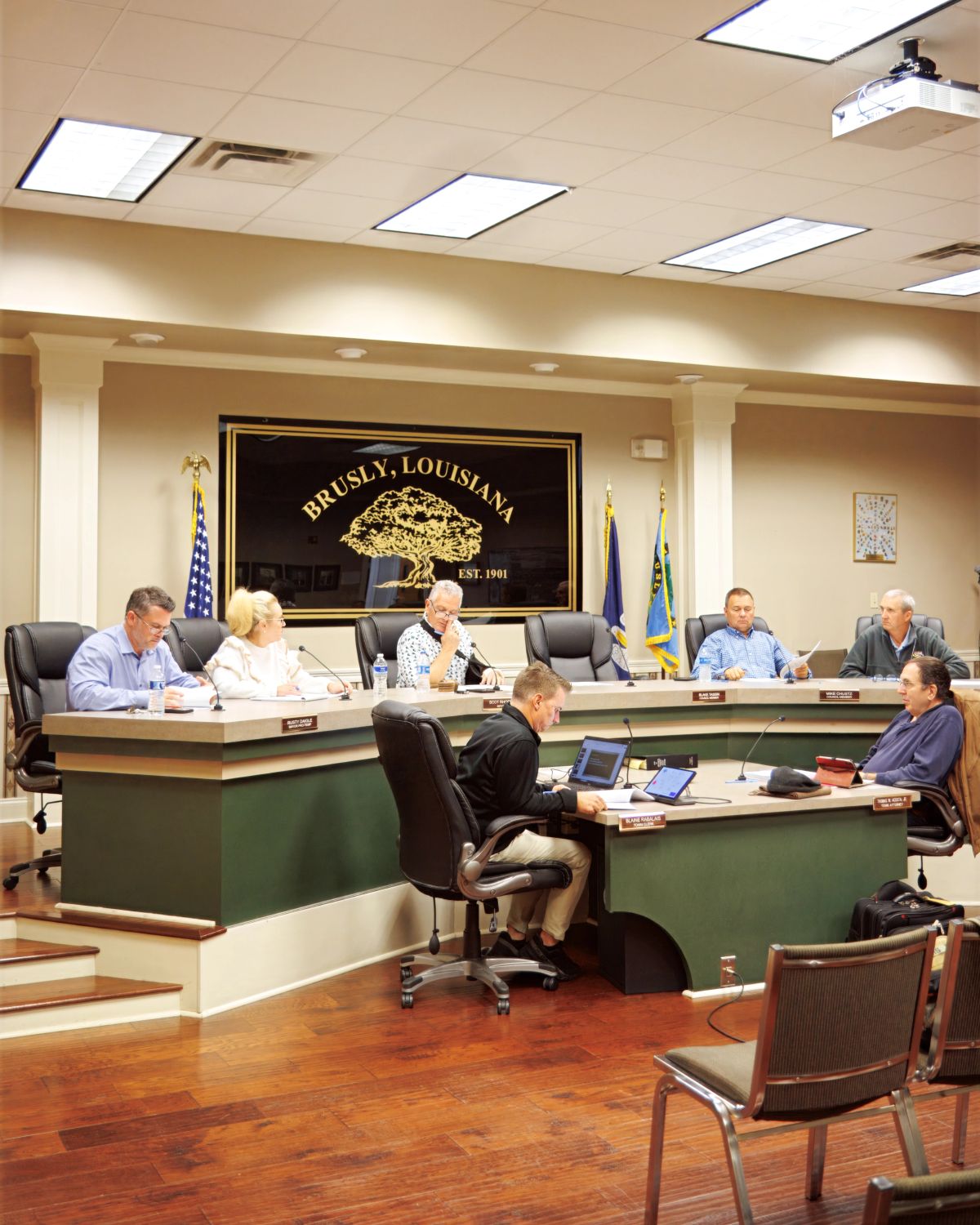
At the December 1 committee meeting, Mayor Scot Rhodes walked the council through photos showing the contractor's self-funded repairs to the deteriorated bridge at the construction site.
"He took it upon himself," Rhodes said, explaining that Spinks had replaced two support pilings. "There's no change order coming here for that."
The bridge problem, first identified in February 2024, forced the use of half-loaded concrete trucks that complicated curing and significantly increased project costs. The council approved a reduced $70,000 change order in July after negotiating down Spinks' original $93,706 request, with Water Sector covering 70% of the cost.
Councilman Rusty Daigle, who cast the lone dissenting vote on that July change order citing breach of contract, immediately raised concerns about the unsanctioned repairs.
"Is he accepting full liability now? Because we need to make sure that he does somehow," Daigle said at the December 1 meeting.
Rhodes said he would check with Town Engineer Toby Fruge on the liability question.
By Monday's regular meeting on December 8, Rhodes provided additional details, explaining that Spinks grew "tired of fighting" with the bridge situation and replaced four to five damaged piles.
"I had no idea he was doing it," Rhodes said. "It went until, I think, either you or Shane called me. I'm like, what do you mean there's piles replaced?"
Daigle continued pressing for verification of the repair work.
"Has anybody verified what the limit is now?" Daigle asked. "Liability-wise, I mean, the time you think we're at fault if something happens and that bridge doesn't hold up."
Daigle questioned the repair method: "How did he replace the four pilings? It doesn't look like it was fully replaced because you'd have to drive that thing... You'd have to drive sheets down there, dewater it, take it out, somehow temporarily support it and then put a whole new pile."
Town Attorney Tom Acosta noted the contractor's actions represent "assumption of the risk," but the council requested written documentation of the repairs and an engineer's report on load capacity.
"We need that 100%," Councilman Chris "Fish" Kershaw said of the liability documentation.
Project Status
At the December 1 committee meeting, Rhodes showed photos of construction progress, explaining that crews had installed rebar in the reactor excavation and stabilized the site with sheet piling after an earlier collapse. Workers fabricated custom iron bracing to counteract water pressure and soil movement pushing against the walls.
"With the water and everything back there and the weight of the dirt and everything, it's pushing it in," Rhodes explained. "The first time, it all collapsed. And now, at least, they have it stabilized where they can get in there and work."
Rhodes acknowledged the weather uncertainty facing the project timeline.
"We have four days of rain coming. Let's face it, I don't know what's going to happen," Rhodes said. "The guy has until the end of the year to get it done. So, we'll just see what happens. But if the bridge is fixed, he can get full trucks in there. He may make it."
Weather and Mix Design Delays
By the December 8 regular meeting, conditions had worsened. Rhodes reported the polishing reactor site was now full of mud from recent rainfall.
Fruge confirmed that a concrete pour originally planned for that week had been delayed due to issues with the mix design.
"He told us he was going to pour tomorrow, but there's no way," Fruge said. "We got issues with the mixed design, so now he's going to need a new mix once I review it. It should be end of the week."
The polishing reactor is the final major component of the sewer lagoon improvements. Once complete, officials say the system will provide 20 years of reliable service without major maintenance needs.
Federal Funding Deadline
The project is funded through the Water Sector Program, which carries a December 2026 deadline to spend allocated federal infrastructure dollars. The town's auditor, Margaret Pritchard of Baxley and Associates, reminded the council Monday that remaining WSP funds must be spent within six months.
"It's got to be spent by December... December 26th, yes," Pritchard confirmed during the audit presentation. "So you're at June 26th... you have six months, hopefully."
If the project isn't completed in time, the town could be forced to repay millions in federal grants.
What's Next
Spinks must complete the polishing reactor by year's end. At the December 1 meeting, council members requested Fruge attend the regular meeting to provide an update given the tight timeline.
"I think he should since this is the last month," Councilman Daigle said. "He's got to work."
The town continues to monitor the project through regular site visits by staff and engineering oversight. Rhodes said he visits the site two to three times per week, with Public Works Supervisor Shane Sarradet checking daily.
This is part of WBR Independent's ongoing coverage of Brusly's sewer infrastructure project. Previous reporting covered the controversial change order approval and bridge access disputes.