Brusly Veteran Recalls Hamburger Hill: 'I Could See the Top When I Got Hit'
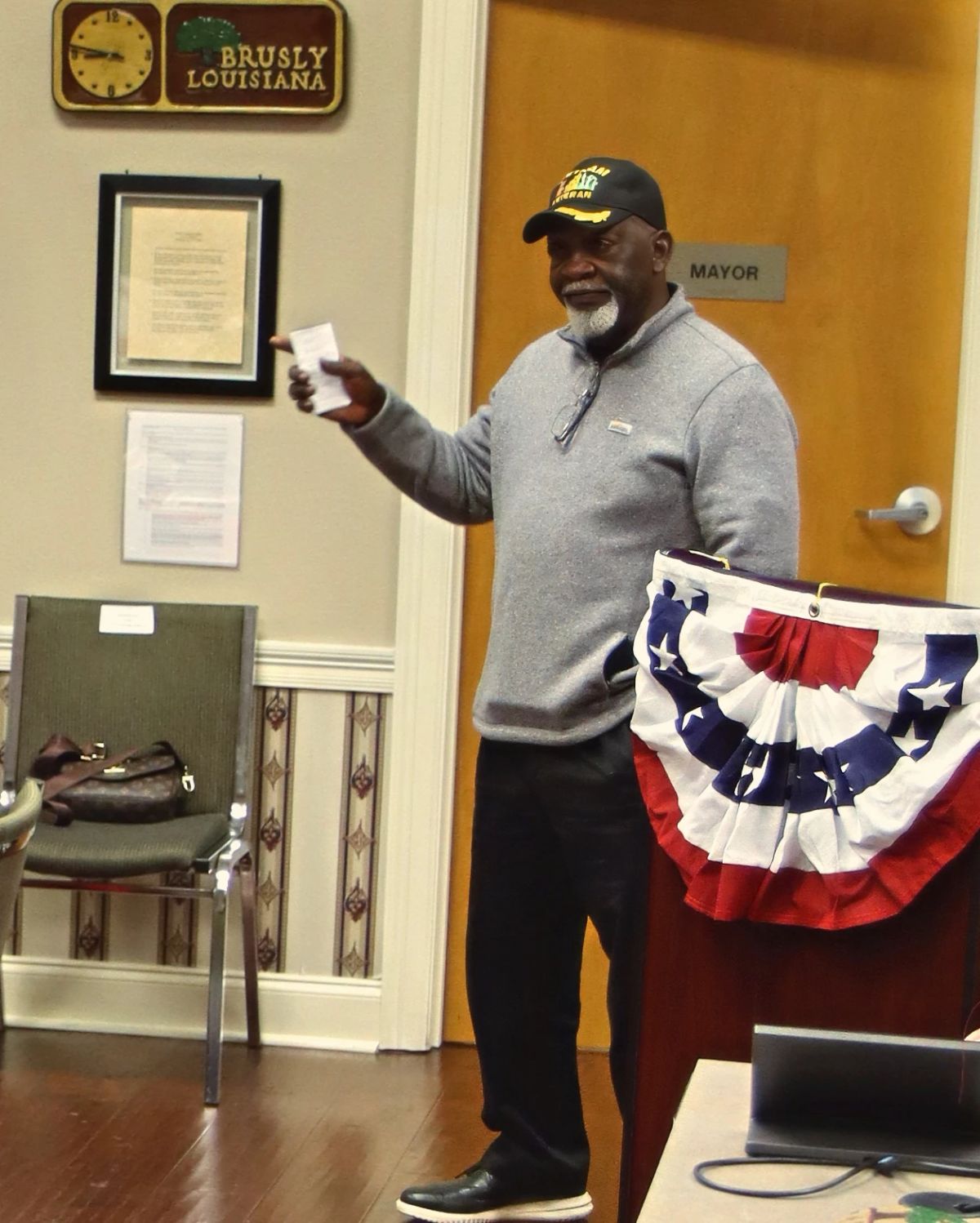
BRUSLY — Thomas Jordan could see the top of the hill when the RPG hit.
It was Day 11 of one of the bloodiest battles of the Vietnam War. After nearly two weeks of fighting up Ap Bia Mountain, what soldiers would come to call Hamburger Hill, Jordan was feet from the summit when he saw the rocket-propelled grenade coming. He slid behind a tree. The explosion sprayed shrapnel across the left side of his body.
His fellow soldiers found him smiling.
"My buddies were telling me, 'Smiley, Smiley,' because I always had a smile on my face," Jordan recalled at Brusly's Veterans Day breakfast last month. "They said, 'You're the dumbest guy we ever saw, Smiley. You wait until the last day to get this thousand-dollar wound, and now you're going home and you're going to be a hero.'"
Jordan, a Brusly resident who lives on Ory Drive, is one of two known Hamburger Hill veterans living in West Baton Rouge Parish. The 1969 battle, later memorialized in a 1987 film, saw American forces assault a heavily fortified North Vietnamese position over 10 days of intense combat. The human cost was staggering.
Jordan's path to that hill began not with patriotism, but with a draft notice.
'They Grabbed Us'
In 1967, Jordan was a young man in Plaquemine, Louisiana, involved in civil rights demonstrations. The draft board had other plans.
"I was volunteered for the draft," Jordan told the crowd. "If you remember what was going on back here in Plaquemine in '67, '68, I was involved with a lot of demonstrations. They grabbed a bunch of us and sent us off. 'You're going to the military or you're going to reform school.'"
At basic training, instructors noticed his physical fitness and asked if he wanted to be a paratrooper. He agreed, not fully understanding what he'd signed up for.
"I'm from Plaquemine, Louisiana. I had never flown on an airplane in my life before," Jordan said. "And now I'm about to jump out of the first plane I ever got on."
He served a year and a half in Vietnam with the 101st Airborne Division. He was part of the last airborne assault in Vietnam before the military discontinued combat jumps following tragedies at Cu Chi. For months, contact with the enemy was constant.
"That was our job. We would go out and we would find them. And then we'd move on to the next mission," he said.
His final mission was Hamburger Hill.
A Career of Service
The wounds Jordan suffered sent him home, but they didn't end his military career. He went on to serve in Panama, where he helped develop the YOLS system for deploying weapons from fast-moving helicopters, technology still used by the military today. He was on the ground in Grenada for five days during the 1983 invasion, mapping landing zones and providing intelligence to Army Rangers—his wife didn't even know where he was.
He trained soldiers in jungle survival, teaching them what to eat, how to purify water, and how to build shelter. Two of his children were born in Panama.
Eventually, he rose to First Sergeant, commanding 145 soldiers—a role he called the best job of his life.
"I looked after my men. And I did," Jordan said. "Three days ago, one of my old soldiers came by my house. He heard my wife had passed. He came by to speak to me and said, 'Sarge, you're the reason I'm here today.' He's got a job, a family, the whole nine yards. But to me, that's enjoyment."
After 20-plus years in the Army, Jordan faced a choice: accept a promotion to Sergeant Major with assignments in Texas and Hawaii, or retire. His wife had just begun her career as a respiratory therapist. He chose to stay.
But he wasn't done serving.
Jordan joined the ROTC program at LSU as an instructor for third-year cadets—the most critical stage of officer training, when future lieutenants learn the fundamentals of ground-level command. He was supposed to serve three years. They asked him to stay for five.
"I ran into a lot of officers that I trained, that I commissioned," Jordan said. "I have a box at home with dollar bills and silver dollars. Every officer I commissioned gave me one. I got about 32 in my box."
Still Teaching
After LSU, Jordan came home to West Baton Rouge, where he worked in the public school system for 23 years. He also served on the Brusly Town Council alongside current Mayor Scot Rhodes in the 1990s.
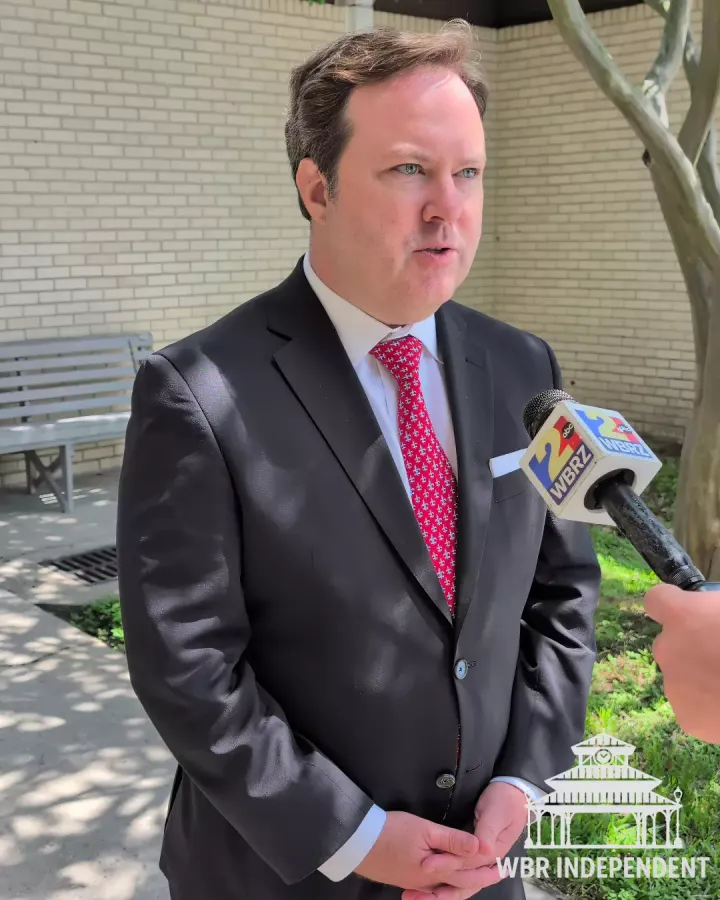
"One thing about Thomas—he always had my back," Mayor Scot Rhodes said at the breakfast. "If he told you he was going to do something, he did it."
Even in retirement, Jordan continued visiting schools on Veterans Day, speaking to students about his service. The questions from children, he said, were always the same.
"You know what the first question they asked me most of the time? Same one my 12-year-old asked me," Jordan said, pausing. "'Did you kill anybody?'"
He didn't answer the question for the crowd. He didn't have to.
"Have a great day. Enjoy your day. And God bless."
Thomas Jordan spoke at the Town of Brusly's Veterans Day Breakfast on November 11, 2025. The annual event honors veterans in the community.