DA, Police Outline Drone Program, Camera Network at Port Allen Neighborhood Watch

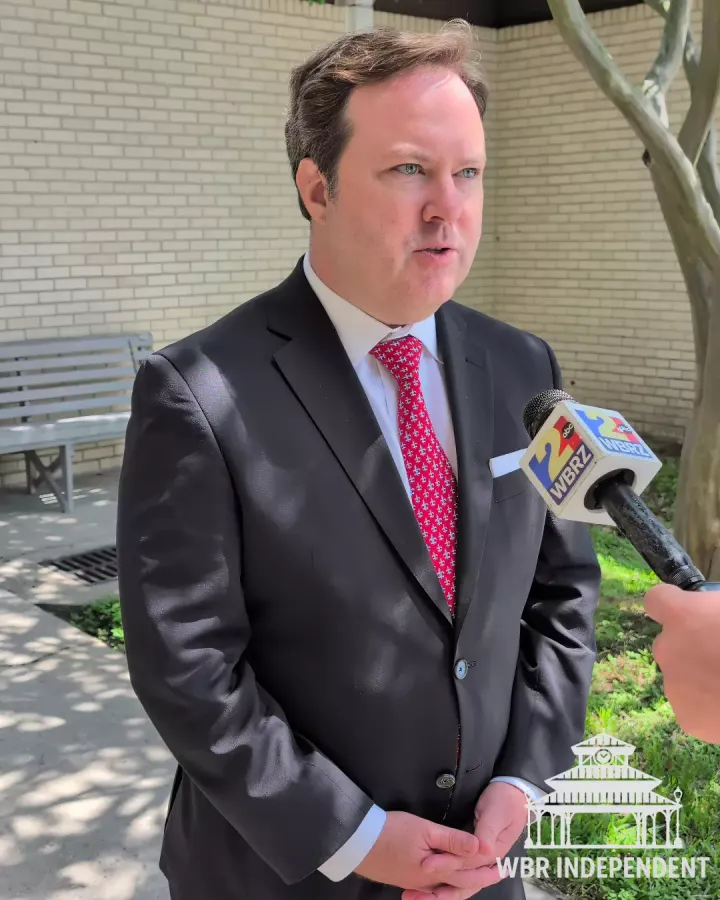
West Baton Rouge District Attorney Tony Clayton says he is negotiating to purchase drones that would automatically dispatch when gunshots are detected — part of a broader push to expand surveillance technology on the west side of the river.
PORT ALLEN — The 18th Judicial District's top prosecutor told Port Allen residents last month that law enforcement is working to build a drone program that would work alongside shot detection technology, and urged homeowners to tie their private security cameras into a growing network available to police.
Clayton made the remarks at the February 24 Port Allen Neighborhood Watch meeting at Port Allen City Hall, where Police Chief Donovan V. Mitchell and Lt. Alaric Celestine also outlined a camera-sharing platform the department is exploring that would allow residents and businesses to voluntarily connect their cameras to law enforcement systems.
Drones and Shot Detectors
Clayton told those gathered that he is in negotiations with a company out of New Orleans to acquire drones for use across the area, describing how the technology would work alongside gunshot detection systems already used in some Louisiana communities.
"If there's a gunshot that goes off, the drones would dispatch and go take pictures and then come back from that area," Clayton said, adding that weather and other variables are still being worked through. He cited New Orleans and Metairie as communities already using drones and said he envisions a pilot program covering Port Allen, Plaquemine, and New Roads.
Clayton said the district already operates roughly 20 to 30 fixed "fly cameras" that have proven useful in investigations. He described one recent case in which a camera picked up a suspect crossing the old bridge, allowing investigators to track the vehicle.
He said he also wants residents with Ring cameras and similar devices to coordinate with local law enforcement so that footage can be used to track vehicles in real time. "Let's tie them up together with law enforcement so that we can track the cars," Clayton said.
Clayton's push to connect resident Ring cameras to law enforcement came just two weeks after a national privacy controversy erupted over that same capability. Amazon's Super Bowl ad on February 9 showcased Ring's "Search Party" feature — an AI-driven system that scans a network of participating home cameras to locate a subject. The ad, framed around finding a lost dog, drew immediate backlash from privacy advocates who warned the technology could easily be used to track people. Within days, Ring canceled its planned integration with Flock Safety, a surveillance company that sells license plate reader networks to law enforcement agencies across the country. Ring and Flock had announced the partnership in October 2025, with the goal of making it easier for Ring users to share footage with police during active investigations. More than 30 cities nationwide suspended or canceled their own Flock contracts in the weeks following the Super Bowl. Axon, the body camera company whose Fusus platform Mitchell and Celestine described at the neighborhood watch meeting, is a separate entity but it too partners with Ring on law enforcement camera access programs.
Resident Camera Network
Both Mitchell and Celestine described a platform called Fusus — acquired by body camera and taser contractor Axon in early 2024 — that would allow residents and businesses with web-based camera systems to voluntarily connect their feeds to a law enforcement portal.
The system, which has been piloted in Lafayette Parish, uses artificial intelligence to search available camera feeds by description. An officer investigating a vehicle, for example, could type in identifying details and the platform would scan connected cameras to generate leads.
Accountability measures are built into the system — officers must attach a case number and a stated reason before accessing camera feeds. The department is considering a city of Port Allen purchase, with the possibility of expanding it parish-wide. Mitchell confirmed this week that no cost has been finalized and the Fusus acquisition is still in the works.
The Fusus platform typically carries a significant cost for law enforcement agencies — industry pricing generally runs from $50,000 to $150,000 or more per year depending on deployment scale. Mitchell and Celestine described the system as not cheap but said they have been through demos and found the capability significant.
The department is also working to map known camera locations across Port Allen to help direct investigators when incidents occur. "Those cameras are life savers for us," Mitchell said.
Clayton's push to connect resident Ring cameras to law enforcement came just two weeks after a national privacy controversy erupted over that same capability. Amazon's Super Bowl ad on February 9 showcased Ring's "Search Party" feature — an AI-driven system that scans a network of participating home cameras to locate a subject. The ad, framed around finding a lost dog, drew immediate backlash from privacy advocates who warned the technology could easily be used to track people. Within days, Ring canceled its planned integration with Flock Safety, a surveillance company that sells license plate reader networks to law enforcement agencies across the country. Ring and Flock had announced the partnership in October 2025, with the goal of making it easier for Ring users to share footage with police during active investigations. More than 30 cities nationwide suspended or canceled their own Flock contracts in the weeks following the Super Bowl. Axon, the body camera company whose Fusus platform Mitchell and Celestine described at the neighborhood watch meeting, is a separate entity — but it too partners with Ring on law enforcement camera access programs.
Fentanyl Warning
Clayton also raised the fentanyl crisis during the meeting, warning that the drug is so potent it can be absorbed through the skin and that overdose victims often require multiple doses of the overdose-reversal drug Narcan to survive.
He urged the department to ensure officers carry Narcan, noting the cost is approximately $35 per dose and that officers on patrol will inevitably encounter overdose victims. Mitchell confirmed this week that all Port Allen Police units are now equipped with Narcan.
Meeting Background
The Neighborhood Watch meets monthly and includes Port Allen police leadership at every session. Neighborhood Watch President Rachelle Sanchez Lyons said tips brought up at meetings are taken seriously and followed up on by investigators.
The next meeting is scheduled for March 24 at Port Allen City Hall. WBR Sheriff Jeff Bergeron, originally scheduled to appear, withdrew due to a scheduling conflict. Burk Hughes, Disaster Programs Manager for the American Red Cross Capital Area, is scheduled as the featured guest speaker.
By John Summers | WBR Independent Published March 17, 2026