Family's Rezoning Denied Despite Unanimous P&Z Approval: Council Admits Code is Broken
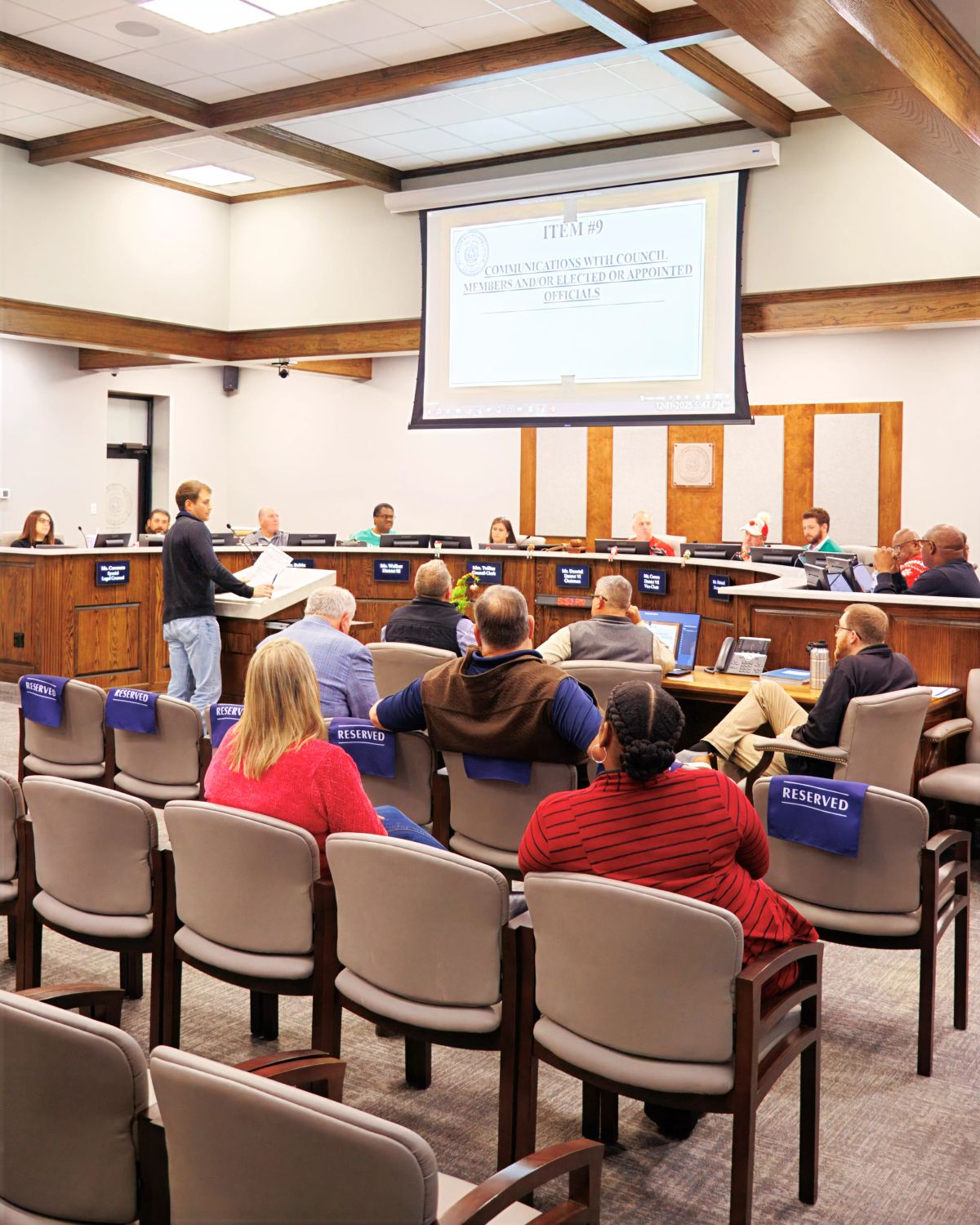
"We will find a solution," councilman promises after voting no
A West Baton Rouge family's request to subdivide land they've owned for generations failed by a single vote on Dec. 11 — not because the council opposed it, but because the parish's own code created an impossible situation.
Johnny Gentile asked the Parish Council to rezone 3.88 acres on Kahn's Road from Agricultural to Residential Minor, a routine step required to formally divide family property. The land already has two residences and a shop on it. People already live there. They already drive in and out every day. Gentile wasn't proposing new construction — he just wanted to put lot lines on paper so family members could legally own their piece.
The Planning and Zoning Commission saw no problem. They approved it 9-0.
The Parish Council vote failed 5-3 with one abstention — one yes vote short of the six-vote supermajority required for master plan changes.
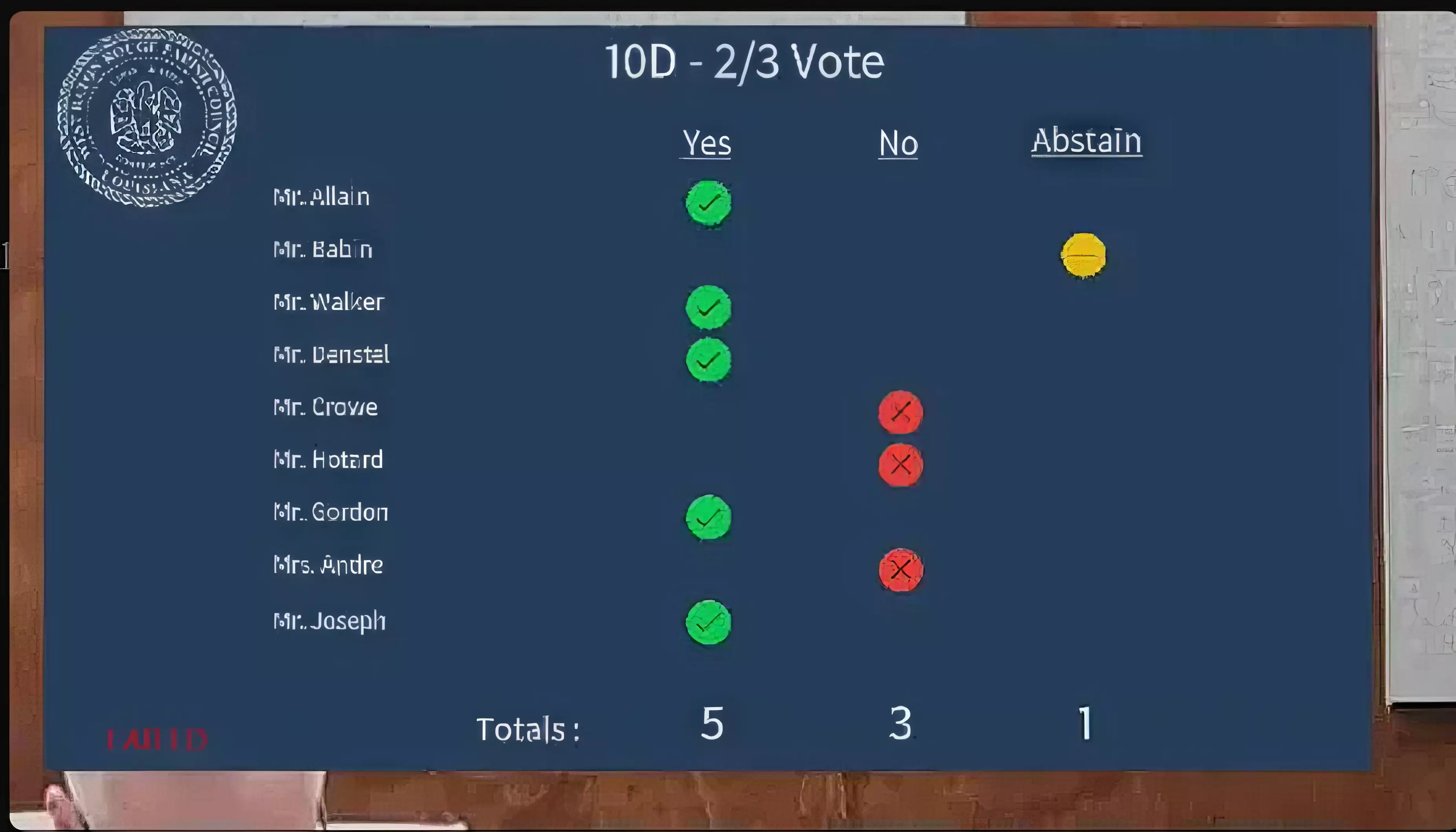
Council Chairman Carey Denstel, who represents the district where Gentile's property sits, voted yes — but it wasn't enough.
"This is my district, and the law is the law, and God, our hands are tied right here bad," Denstel said. "I wish — I really do wish — we could do something here."
The Catch-22
The problem starts with location. Gentile's property sits south of the railroad tracks on Kahn's Road, separated from the nearest public road. Access comes through a servitude across adjacent family land owned by Margaret Gentile — an arrangement that's worked for decades.
But current parish code requires minor subdivisions to have public road frontage. The Gentile property doesn't have it.
"For it to be rezoned to a minor subdivision, the minor subdivision has to have public road access," Zoning Administrator Brandon Bourgoyne explained to the council. "Since basically it's cut off by the railroad track, it does not front on a public road."
Here's where it gets absurd: the code offers no alternative.
Family partitions in West Baton Rouge must be rezoned to Residential Minor. That's the only option. There's no Agricultural subdivision pathway, no family exception, no waiver process.
"If it's a family partition, you have to — per our code — it can only be rezoned to a minor," Bourgoyne said. "So there's no other way to cut it. They cannot rezone it to AG because our code says you can only rezone it to a minor subdivision."
So the Gentiles followed the only path available. And that path led to a wall.
A Code That Contradicts Itself
The denial becomes harder to understand when you read what the parish's own code says about the zoning district Gentile was trying to get.
Residential Minor — or R-M — is the zoning classification required for family land divisions in West Baton Rouge. It's the only option. And according to Section 104-28(1)(j), it was specifically created for situations like Gentile's.
The code states R-M zoning "shall be to provide for areas in the parish that will allow for affordable residential minor neighborhoods (six or fewer lots) using less stringent development requirements on private drives that are not maintained by the parish."
In plain English: R-M is designed for small family subdivisions on private roads.
The Gentiles were denied R-M zoning because their access is a private road.
The code says the district is for private drives. They were denied for having a private drive.
More troubling: the parish doesn't actually know what the access is — even though they were told.
At the December 2 Planning and Zoning meeting, Margaret Gentile — who owns the adjacent property — explained the situation clearly. "I own the land right next to it," she said. "As far as them accessing their land, the only way they can is through my land."
P&Z approved the request 9-0 without raising concerns about road access. The issue that would ultimately kill the rezoning nine days later was never flagged.
Yet at the Dec. 11 council meeting, no one seemed to have that information. When questions arose about the access strip, no one could answer basic questions. Is it public? Private? A servitude? Who owns it?
"We just don't have an actual plat or any physical tangible proof that it is," Bourgoyne said.
Parish President Jason Manola acknowledged the parish would need legal help to figure it out.
"We would have to get legal counsel to actually do research and see when there's a dedication," Manola said. "It's some type of servitude — a road servitude, some type of dedicated servitude. But I think it'd be wise for us to actually get legal to research when the servitude was actually dedicated and what type of servitude it is."
The parish maintains the drainage ditch along the access. It does not maintain the road itself.
The question lingers: How did a rezoning request get denied for lacking public road access when the parish doesn't even know who owns the road — and when the adjacent landowner had already explained the access arrangement on the record nine days earlier?
And how did it reach a council vote without basic due diligence? Planning and Zoning approved the request unanimously without flagging the access issue. The council arrived at the meeting without answers to fundamental questions about road ownership — questions they were asking during the meeting, about information that was already in the public record.
"My Vote Is Not Against Your Right"
Councilman Brady Hotard cast one of the three no votes — then spent several minutes explaining why he wished he didn't have to.
"I love the theory of you being able to get land from your grandfather and be able to cut this little plot up for you to have a house or a home," Hotard said. "The other side of it is, objectively, this application does not meet what the code states."
Hotard's concern was precedent. Approve this, he argued, and the next applicant might be a developer looking to build an eight-lot subdivision on a private street for profit.
"The hard part for me, John, is we allow you to do this, and the next person comes and wants to develop a six or seven or eight lot minor subdivision purely for monetary benefit in an area that it doesn't apply for through a private street," Hotard said. "And we say, 'Oh no sir, sorry sir, you have private road access only.' He's like, 'Well, you just approved somebody to do that.' Then our hands are very tied legally."
But Hotard made clear his no vote wasn't a rejection of Gentile's right to divide his family's land.
"My vote against you tonight is not against your right or your ability to rezone your property — I think you should," he said. "It's strictly based on how the code is written and what the code says and me upholding that code. But you have it for me that I will take an action to give you another option, or give anybody like you in the same situation another way to do this."
Council Promises a Fix
After the vote failed, Hotard addressed Gentile directly.
"Mr. Johnny, let me tell you something right now — whether it be bringing back the family partition definition, whether it be looking at properties that are landlocked from public access, we will find a solution that allows you to put your house or your trailer or whatever you want to do here," he said. "Johnny, when that time comes, you can reapply on that rezoning and we'll have the code hopefully better suit your needs in this situation."
Council Chairman Carey Denstel acknowledged the Gentiles likely aren't the only family caught in this trap.
"There's probably some of these somewhere else that we don't even know about," Denstel said. "And we could come across it."
He's almost certainly right. Drive the back roads of West Baton Rouge and you'll find family subdivisions on private lanes throughout the parish — properties divided generations ago under rules that no longer exist.
What Changed
At some point, the parish eliminated its "family partition" definition from the code. That provision had offered a pathway for exactly these situations — families dividing land among heirs without meeting full subdivision requirements.
Without it, landlocked properties have no mechanism to be legally subdivided for family use. The Gentiles did everything right. They went to Planning and Zoning. They got unanimous approval. They followed the process.
The code itself blocked them.
A Pattern Emerges
This marks the second land use decision in recent months where the six-vote supermajority requirement — not the merits of the case — determined the outcome.
On August 19, P&Z denied a request to allow cane trucks to continue using a staging area on Rosedale Road near Port Allen High School. On August 28, the council majority wanted to override that denial and approve it — but couldn't get the six votes needed. The request failed despite five council members voting yes.
On Dec. 11, the Gentile request — which P&Z had unanimously approved — met the same fate at council. The majority again voted yes, but again couldn't reach six. The request failed despite five council members voting yes.
Different cases, opposite P&Z recommendations, same result: five votes means nothing. You either hit six or you lose.
No timeline was given for when code changes might come before the council. The Gentiles will have to wait — and pay to reapply — whenever that happens.
Zoning and land use is the core function of parish government. The Planning and Zoning Commission exists to vet these requests. The council exists to make informed decisions. Staff exists to research and prepare. The code exists to provide clear pathways.
Every part of that system failed the Gentile family.
P&Z heard testimony about the access arrangement and approved it unanimously — without flagging the issue that would kill it. The council arrived unprepared, asking basic questions during the meeting about information already in the public record. The parish president admitted they don't know who owns the road. And the code offered no path forward, even as it explicitly describes R-M zoning as designed for private drives.
The Gentiles did everything right. They followed the process. They got unanimous P&Z approval. They showed up to the council meeting.
The parish did not do its homework. And a family paid the price.