LA-1 Bridge Replacement on Track for 2027 Completion; South Mississippi River Bridge Enters Environmental Review
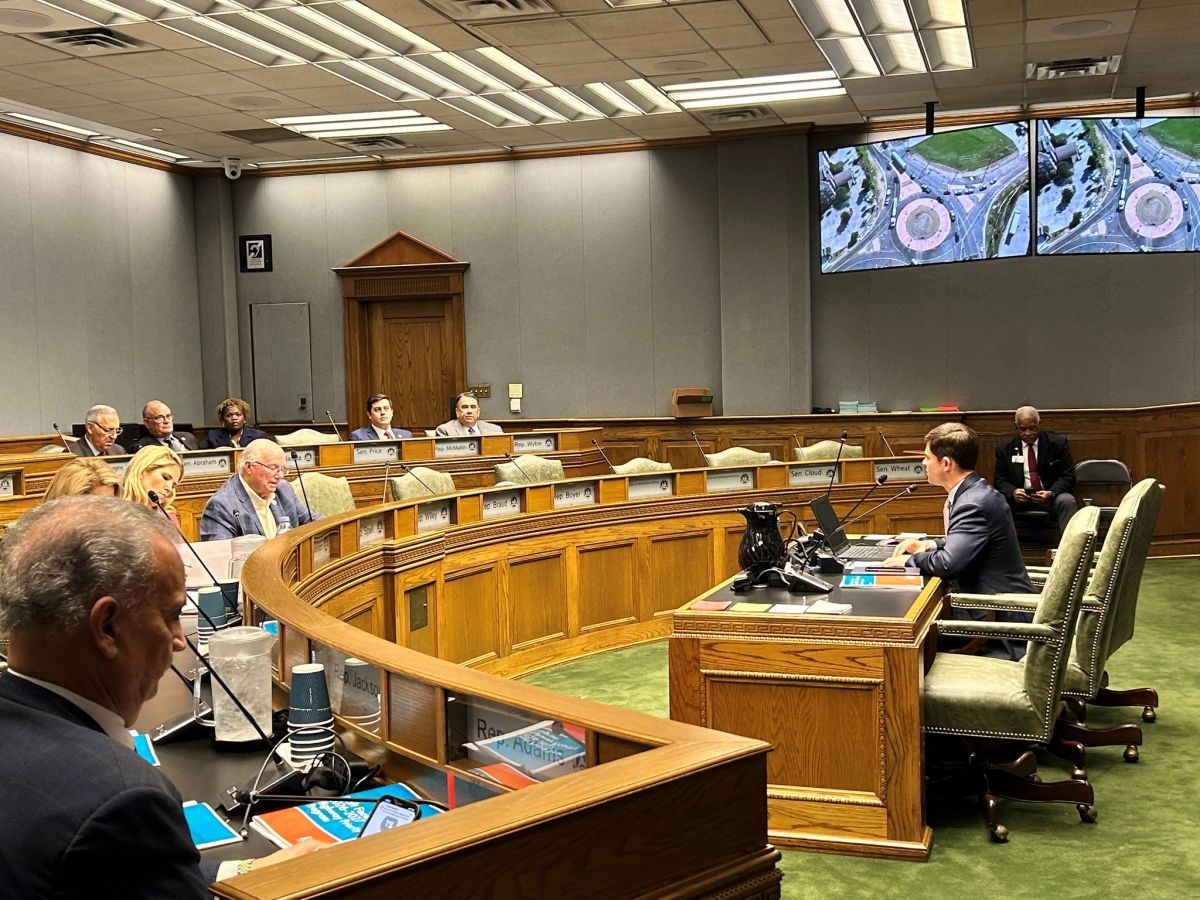
BATON ROUGE — The LA-1 Intercoastal Bridge replacement project remains on schedule for 2027 completion, DOTD District 61 Administrator Josh Stutes told lawmakers Tuesday during the final stop of the department's statewide highway priority program roadshow.
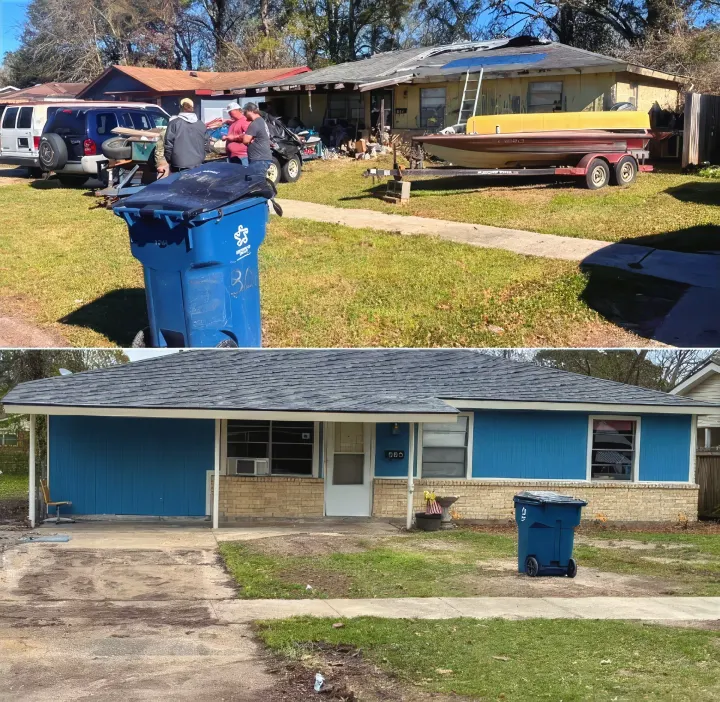
The two-phase project, totaling approximately $150 million, will replace both the northbound and southbound structures over the Intracoastal Waterway. The southbound structure is now complete and in service. Contractor J.B. James is currently constructing the northbound structure and will demolish the remaining original structures, rehabilitate service roads, and construct a new I-10 exit ramp.
"We have a structure that's higher of elevation to support the maritime industry there," Stutes said. "Building it under traffic is very, very challenging. But we're working through a lot of that and maintaining industry as well as commuters."
The original bridge was constructed in the 1950s.
Mississippi River Bridge South Enters 12-Month Environmental Study
DOTD Secretary Glenn Ledet confirmed the long-awaited Mississippi River Bridge South project has entered its environmental assessment phase, with community briefings scheduled for Tuesday evening in St. Gabriel and Wednesday in Plaquemine.
The department narrowed 32 potential alignments down to three alternatives now under evaluation. The 12-month study will examine both the alignment and the river crossing itself.
Current funding sits just under $400 million. Ledet said the department is exploring federal grants, toll revenue options, and coordination with the Capital Area Road and Bridge District to compile additional funding.
Iberville Parish President Chris Daigle, whose parish would host the western terminus of any new bridge, urged lawmakers to restore $40 million in annual mega-project funding that was suspended for fiscal years 2025 and 2026.
"When you take the $40 million and you bond it out for the 40, 50 years, which was the original intention, that's a revenue of $6 to $7 million," Daigle said. "So you put the $40 million back, we're over a billion dollars towards the Baton Rouge Regional Bridge."
Daigle noted the project has been discussed for 30 years, with costs escalating from an estimated $600 million years ago to $1.2 billion recently to now exceeding $2 billion.
$1.2 Billion Statewide Investment
The fiscal year 2026-2027 Highway Priority Program includes $1.2 billion in transportation infrastructure investment statewide, with $913 million allocated for construction across 302 projects.
District 61, which encompasses West Baton Rouge, Ascension, Assumption, East Baton Rouge, East Feliciana, Iberville, Pointe Coupee, St. James, West Baton Rouge, and West Feliciana parishes, is slated for 45 construction projects.
The investment breaks down to $553 million for preservation work, $101 million for operations, $74 million for safety improvements, and $185 million for miscellaneous projects including school safety routes and the road transfer program.
Ledet emphasized the department's transformation under Governor Jeff Landry's administration, pointing to the Louisiana Transportation Infrastructure Fund as evidence of improved project delivery.
"That 500-plus million dollars that you gave the department over the last two years has been critical to our success," Ledet told lawmakers. "We've been able to deliver all of these projects both on time and under budget."
The LTIF funding delivered 62 projects on time in 2024 and another 37 on or ahead of schedule this year.
Regional Leaders Push for Capacity Improvements
Multiple parish officials stressed the need for road capacity improvements to support announced industrial developments totaling tens of billions of dollars across the region.
Ascension Parish Infrastructure Director Ruth Phillips said projects previously considered long-term priorities are now immediate needs following recent economic development announcements.
"Pavement striping and mill patch overlay is great, but it doesn't get you anywhere faster," Phillips told the committee. "We really want to see capacity, new roads, new interchanges, more roundabouts."
St. James Parish President Pete Dufresne, attending for the fourth consecutive year, again advocated for reconstruction of Louisiana Highway 642, a 1.3-mile state highway through a residential area that carries heavy industrial freight traffic.
"This state highway lies within a residential area, but is heavily used by freight traffic to and from the plants along the River Road," Dufresne said. "The roadway has deep wheel path running and very steep side slopes, which are a major safety concern."
Dufresne also questioned why a roundabout project at LA-3125 and LA-3274 remains listed as "waiting on funding" despite being in design since 2020, with utility relocation already underway.
City of St. George Makes First Appearance
Andrew Murrell, spokesman for the newly incorporated City of St. George, made the municipality's first appearance before the transportation committee.
St. George, which became Louisiana's newest city on April 26, 2024, is now the state's fifth-largest city by population and inherited 500 miles of city roadways.
Merrell identified the I-10/Highland Road interchange as one of the most dangerous intersections in East Baton Rouge Parish, noting Highland Road carries traffic volumes comparable to Airline Highway on a much narrower roadway.
Utility Delays Frustrate Lawmakers
State Representative John Wyble questioned why construction projects frequently stall for weeks when utility companies fail to relocate infrastructure on schedule.
"This contractor who has other jobs realized that there's a relocation problem. And I'm not sure he's terribly concerned about it because he takes his work crew to catch up on another project," Wyble said.
Assistant Secretary of Project Delivery Eric Dauphine said the department is now requiring projects to be delivered six months before letting dates rather than the previous three months, providing additional time to resolve utility conflicts before construction begins.
The Highway Priority Program draft will be presented to the House and Senate Transportation Committees during the 2026 legislative session.
Addis Mayor David Toups was among local officials attending Tuesday's hearing.