Local Leaders Could Fast-Track Traffic Solutions While State Restructures
West Baton Rouge Parish residents endure daily gridlock, but officials have tools to act now rather than wait for slow state process
By John Summers | WBR Independent
West Baton Rouge Parish commuters face a choice every evening: sit in traffic for 45 minutes or take back roads that weren't designed for the load. But while the Louisiana Department of Transportation and Development undergoes major restructuring, local leaders could take action now to ease the daily grind.
Port Allen resident Anthony Summers outlined the problem in a recent letter to the editor after his daily commute to Plaquemine highlighted what thousands of residents experience: outdated infrastructure choking economic growth and quality of life.
"The Intracoastal Canal Bridge remains our biggest chokepoint," Summers wrote. "When traffic was temporarily routed over the old northbound span, congestion eased. Now that all vehicles use the new southbound bridge, gridlock has returned."
Bridge Improvements Begin, But Questions Remain
The timing of Summers' proposal proved prescient. At last Thursday night's Parish Council meeting, Parish President Jason Manola announced that DOTD will begin double-striping the northbound Intracoastal Bridge within days, requiring northbound Baton Rouge-bound traffic to commit to the far-right lane.
"Tomorrow night they will begin double striping double lining the intracoastal bridge the northbound side to where you will have to make a commitment if you're going to Baton Rouge to get in the far right lane," Manola told the council Thursday.
The improvement required a contractor change order that officials had been requesting since early in the project, but the piecemeal approach highlights the broader coordination challenges Summers identified.
The Daily Reality
The numbers tell the story residents live daily. From the Walmart traffic light to the Intracoastal Canal Bridge, what should be a five-minute drive stretches to 20 minutes during evening rush hour. The Louisiana 1 corridor from Addis through Port Allen features a series of poorly-timed signals that create a stop-and-go nightmare.
"Drivers hit red light after red light — including the 'temporary' Sugar Plantation Parkway signal," Summers noted. "This creates unsafe conditions as motorists speed between lights, while those crossing La. 1 face safety concerns."
Meanwhile, the long-awaited Highway 1 improvement project through Port Allen faces continued delays. Parish officials reported Thursday that work now won't begin until "late August or early September" after contractors were awarded bids in June—the latest in a series of missed timeline promises.
Local Solutions on the Table
Rather than waiting for state bureaucracy, Summers proposed immediate fixes that local governments could potentially implement:
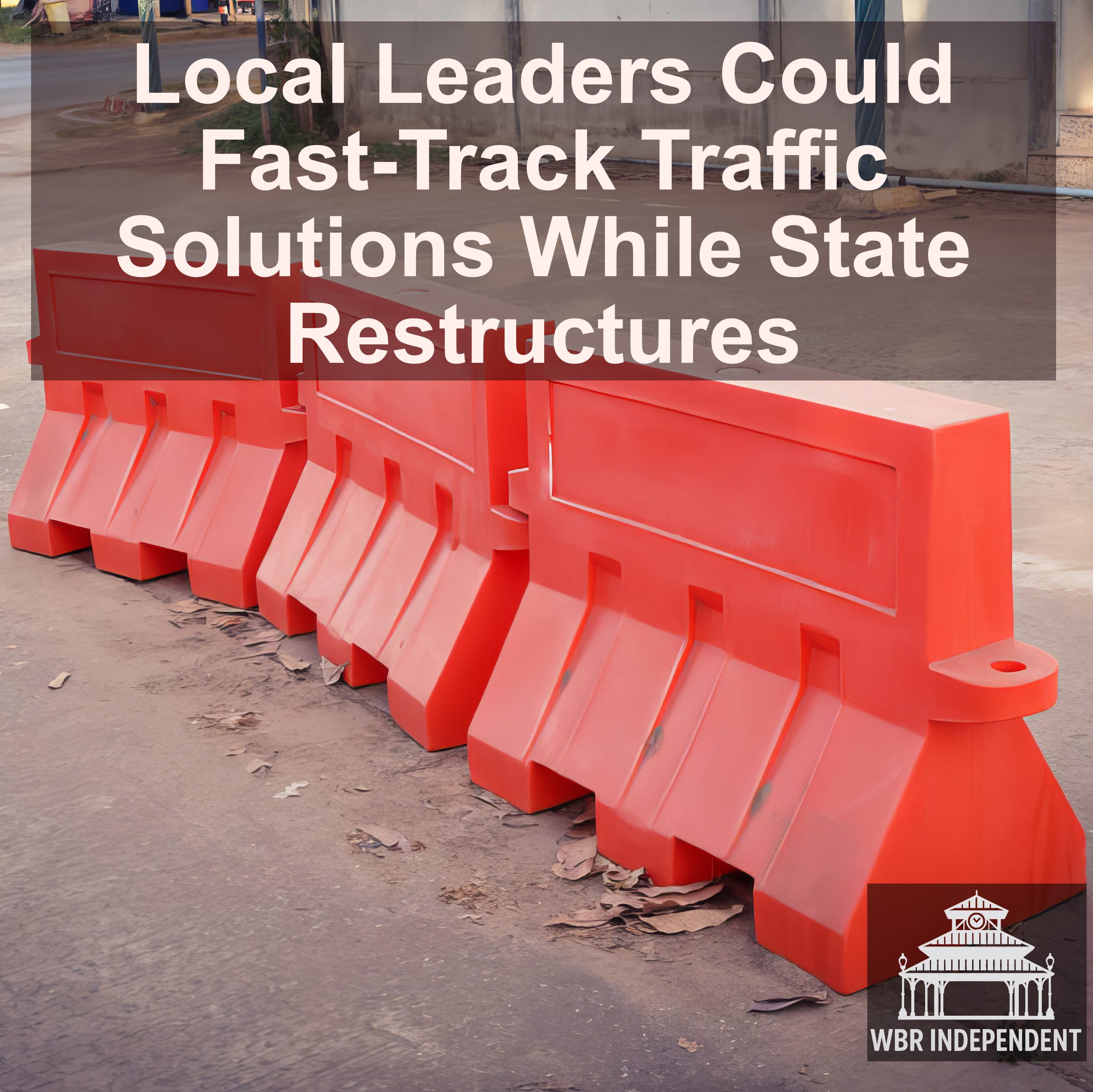
Bridge Improvements: Installing jersey barriers on the new Intracoastal Canal Bridge Northbound would separate traffic heading to Port Allen versus Baton Rouge, reducing dangerous lane-cutting. Converting the shoulder from Walmart to the bridge into a travel lane could double northbound capacity.
Signal Coordination: Modern traffic management systems could synchronize the La. 1 signals to reduce the red-light progression that forces dangerous speeding between intersections.
Regional Task Force: A coordinated effort including West Baton Rouge mayors, Parish President Jason Manola, DOTD representatives, and the state delegation could present unified solutions rather than piecemeal requests.
Growing Support for Regional Approach
The task force concept is gaining traction among local leaders. Port Allen Mayor Terecita Pattan expressed support for the collaborative approach when contacted by WBR Independent.
"Oh, yeah," Pattan said when asked if she would participate in a traffic task force involving all municipal mayors and parish government. The mayor confirmed her willingness to work with other jurisdictions on regional traffic solutions.
Bridge Contract Frustrations
Kleinpeter also revealed frustrations with DOTD's bridge project management, noting that local officials fought unsuccessfully to prevent the current traffic configuration.
"I've sat down, I've called a meeting with them and the two parish presidents of Iberville and West Baton Rouge," Kleinpeter said. "Whenever we found out that the old bridge was going to be demolished, we were going to put all the lanes back on the southbound so they could demolish both bridges, and we went and fought tooth and nail trying to get it to where they didn't tear down both bridges, and that wasn't in the contract."
The representative noted that the current 1,000-day contract could have been completed in "almost half the amount of time" with better planning, or delayed until the LA-415 connector opens in 2028 to provide alternative routes.
"You had two lanes dedicated to Port Allen," Kleinpeter said of the previous configuration. "You're going to see the real hell here when school starts back up."
The key question facing local leaders: How much can they accomplish without waiting for state approval?
Parish President Manola confirmed ongoing discussions about traffic coordination. At a previous's council meeting, he noted that he and Brusly Mayor Scot Rhodes have been working with DOTD on traffic light synchronization along the Highway 1 corridor.
West Baton Rouge Parish Council Chairman Carey Denstel acknowledged the traffic problems, with multiple council members noting that state legislators including Senator Rick Edmonds and Senator Caleb Kleinpeter are also working on traffic improvement projects.
However, State Representative Kleinpeter expressed frustration with DOTD's responsiveness to local traffic concerns when contacted by WBR Independent.
"I've been on DOTD's butt for quite a while. You can't even get them to sync Port Allen lights, much less," Kleinpeter said. "I've caught red lights all the way from the intracoastal all the way down through Plaquemine and they've raised all kind of hell. So good luck with that."
While supporting the concept of better coordination, Kleinpeter indicated he would likely take recommendations from a local task force rather than participate directly due to existing board commitments. "I would probably just take a recommendation from them or whatever they come up with. I'm already on so many boards and commissions already that it just takes away from so much of my work and family time."
The Authority Question
Local initiative could unlock federal transportation grants that require local matching funds and project readiness. The Infrastructure Investment and Jobs Act provides billions for state and local transportation projects, but applications require detailed engineering and local commitment.
"If we wait for the state to solve this, we'll be waiting years," said one local business owner who requested anonymity. "But if the parish and cities work together, we could have solutions implemented while DOTD figures out their reorganization."
DOTD in Transition
The timing creates both opportunity and uncertainty. Governor Jeff Landry recently Lafourche Parish President Archie Chaisson as DOTD's executive director of the Office of Louisiana Highway Construction following the appointment of Glenn Ledet Jr. as DOTD Secretary to replace Joe Donahue.
Parish President Manola noted that Chaisson's appointment provides "another good contact" for advancing regional transportation projects, building on existing relationships through the Louisiana Parish Presidents Association.
Any significant DOTD reorganization proposals must be presented to the Legislature by January 15, 2025. The restructuring could prioritize regional chokepoints like West Baton Rouge's traffic problems—or push them further down the priority list.
What's Next
Summers, who raised these issues at a past parish council meeting, said the solution requires leadership willing to think regionally rather than just locally.
"For decades, residents have endured metro-level congestion while West Baton Rouge leaders focused on a single incomplete approach," he wrote. "It's time to explore modern alternatives to traffic signals or upgrade signals to work together and respond to traffic conditions."
The proposed task force would need buy-in from multiple jurisdictions, but the payoff could be significant. Reduced commute times mean more time with families, lower vehicle maintenance costs, and improved economic development prospects as businesses see reliable transportation access.
"This isn't just about traffic — it's about safety, quality of life and economic impact," Summers concluded.
The question now is whether local leaders will form the task force and pursue immediate solutions, or continue managing traffic problems one red light at a time.
The WBR Independent contacted Parish President Jason Manola, Addis Mayor David Toups, and Brusly Mayor Scot Rhodes for additional comment. We will update this story with their responses.
Contact the WBR Independent at editor@wbrindependent.com with your traffic experiences and solutions.
#WBRIndependent