"Nobody Made It Yet": 911 Recordings, Dispatch Logs Reveal Erwinville Fire Response
One firefighter worked alone for 11 minutes while family watched home burn; official timelines don't match records
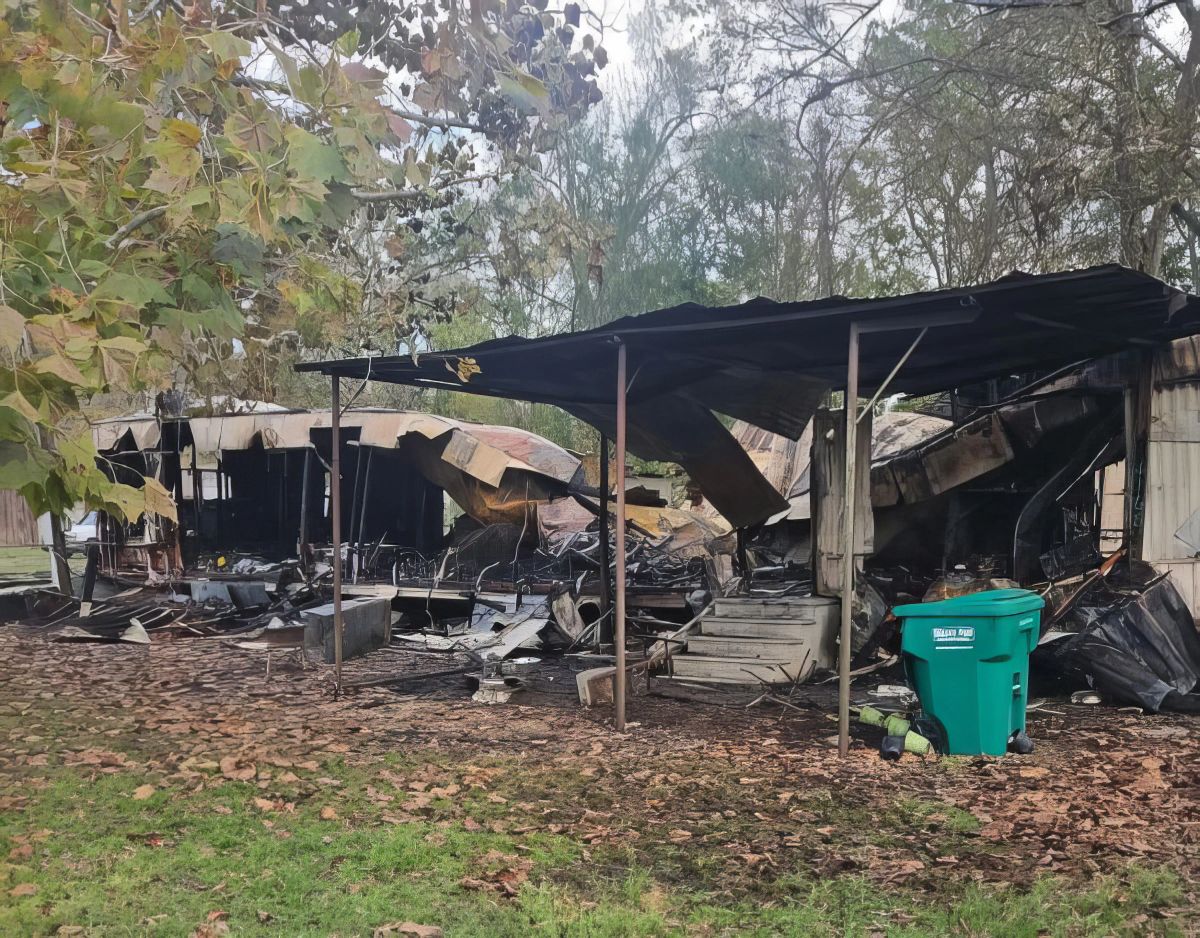
ERWINVILLE — At 2:50 a.m. on December 7, a woman stood outside her burning trailer on Erwin Avenue, screaming into the phone at a 911 dispatcher.
"My babies! My babies!" she screamed, referring to her two dogs still trapped inside.
The dispatcher asked if help had arrived.
"You don't see anyone yet?" the dispatcher asked. "Nobody made it yet?"
Thirteen seconds later, according to parish dispatch records, a single fire unit arrived. One firefighter. One truck. A trailer already fully engulfed in flames.
Backup wouldn't arrive for another 11 minutes.
Now, dispatch logs, radio traffic, and 911 recordings obtained by WBR Independent reveal a detailed timeline of that night — one that raises questions about the official account provided by the West Baton Rouge Fire Department and Butch Browning of Browning Associates LLC.
What the Records Show
The first 911 call came at 2:40:48 a.m. from a neighbor who spotted the fire from her home on Maple Street.
"I think it's on Erwin Avenue," she told the dispatcher. "It's a trailer."
By 2:41:58, dispatch broadcast the call: "Attention Fire North. Reports of a structure fire on Erwin Avenue between Patricia and Maple."
Engine 9 — labeled "U9" in dispatch records — went enroute at 2:43:09.
At 2:47:28 — before any fire unit arrived — radio traffic confirmed the trailer was "fully involved."
The homeowner's wife called 911 at 2:49:51, giving the exact address: 4168 Erwin Avenue.
"Is everyone out of the home?" the dispatcher asked.
Then, at 2:50:23: "My babies! My babies!"
"Nobody made it yet?" the dispatcher asked.
Engine 9 arrived at 2:50:36 — one firefighter, working alone.
11 Minutes Alone
Dispatch records show the next unit, DC5, didn't arrive until 3:01:31 — more than 11 minutes after Engine 9 reached the scene. DC5 is a deputy chief's vehicle, not a fire engine.
Engine 2 arrived at 3:02:04. Rescue 1 at 3:04:07. The first medic unit didn't arrive until 3:12:51.
FD2 wasn't even dispatched until 3:08:35 — 18 minutes after Engine 9 arrived alone. It reached the scene at 3:30:32.
Radio traffic captured the chaos. At 3:01:56, a voice reported: "We got five of us across the street" — family members watching as a single firefighter worked to connect hoses.
Travis Lee, the homeowner and a third-generation volunteer firefighter, was among them. His family pulled him away from trying to fight the fire with a garden hose.
Lee said the lone firefighter was still connecting hoses when he arrived.
"He didn't drop it at the hydrant, wrap it around, and pull up to the house like he normally would," Lee told WBR Independent. "He was doing it all by himself."
The trailer was a total loss. Two dogs died inside.
How Response Time Is Measured — And Why It Matters
Fire response involves several stages, each with its own timestamp:
911 call received: When a caller reaches dispatch. In this case, 2:40:48 a.m.
Dispatch broadcast: When dispatchers alert fire units over the radio. The first broadcast went out at 2:41:58.
Enroute: When a unit acknowledges the call and begins traveling. Engine 9 went enroute at 2:43:09.
On scene: When the unit arrives. Engine 9 arrived at 2:50:36.
When Browning told WBRZ the department had a "seven-minute response," he appears to be measuring from enroute (2:43:09) to on scene (2:50:36) — about 7.5 minutes.
But from the perspective of someone watching their home burn, response time starts when they call 911 — not when a fire truck starts moving.
From first 911 call to first unit on scene: 9 minutes, 48 seconds.
And that unit had one firefighter, who worked alone for another 11 minutes.
Three Official Times — None Match the Records
Hours after the fire, the West Baton Rouge Fire Department posted on Facebook that the call came in at 2:54 a.m. — more than 13 minutes after the actual first 911 call.
Browning told WBRZ 2:43 a.m. — the dispatch time, not when the call came in.
Dispatch records show the first 911 call was answered at 2:40:48 a.m.
| Source | Time Given | Actual (per records) |
|---|---|---|
| Fire Dept. Facebook | 2:54 a.m. | 2:40:48 a.m. |
| Browning (WBRZ) | 2:43 a.m. | 2:40:48 a.m. |
| Dispatch records | — | 2:40:48 a.m. |
Browning Responds — Records Tell a Different Story
In an interview with WBRZ two days after the fire, Butch Browning defended the department's response.
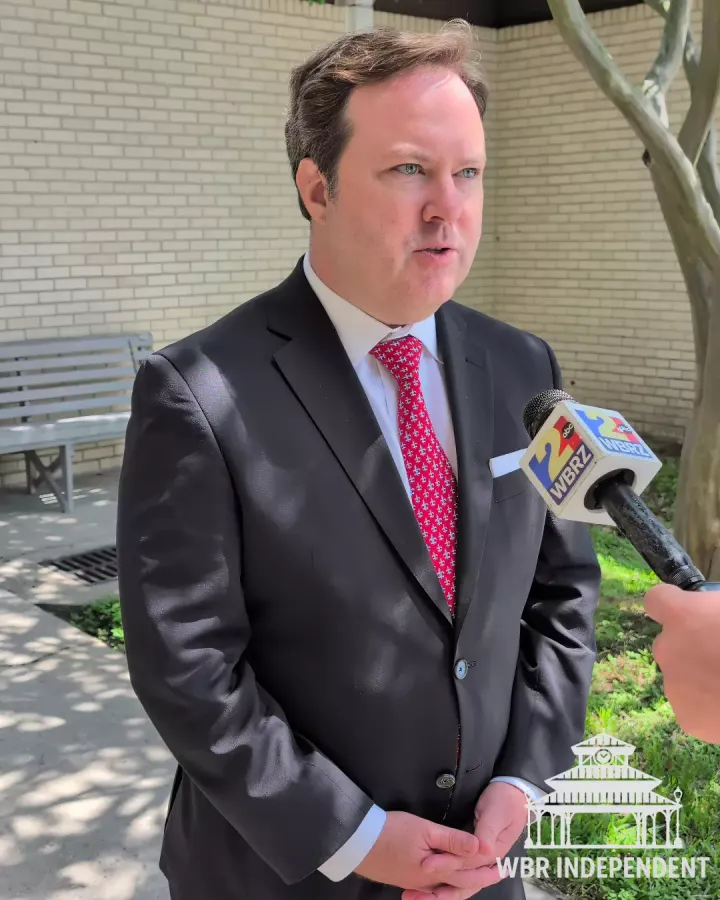
"This particular fire was fully engulfed. It wouldn't matter if a big city fire department had responded with four men on a truck, it would still be a total loss," Browning told WBRZ.
But Browning's defense sidesteps the central question: What happens at the next fire when someone is trapped?
NFPA standards don't exist to save structures already fully involved — they exist to ensure adequate staffing for rescue operations, firefighter safety, and effective suppression before fires become uncontrollable.
One firefighter cannot connect a supply line to the truck, lay hose lines, force entry, and conduct a search simultaneously. For 11 minutes in Erwinville, that's exactly what the parish was asking one person to do.
Browning told WBRZ the department received the call at 2:43 a.m. Dispatch records show the first 911 call came at 2:40:48 — nearly three minutes earlier. The 2:43 time Browning cited is when units were dispatched, not when the emergency was reported.
Browning also told WBRZ the department has "over 25 dedicated people right now responding to fire."
But in an April 2025 fire board meeting, Browning himself reported that only five volunteers "turn out in fire gear and fight fire." At that same meeting, volunteers with decades of service said they felt excluded and ignored — complaints Browning dismissed.
One of those volunteers, Anthony Summers, told the board: "In the last two years it feels to me like we're not included... the perception is I'm not wanted anymore."
The following month, Anthony and John Summers were terminated from the volunteer program. John Summers is the editor of WBR Independent.
How It Compares to National Standards
The National Fire Protection Association sets benchmarks for fire department response.
NFPA 1710, the standard for career fire departments, calls for the first engine company to arrive with four firefighters within 4 minutes of dispatch. A full first alarm assignment — 15 to 17 firefighters — should be on scene within 8 minutes.
NFPA 1720, the standard for volunteer and combination departments, sets benchmarks based on population density. For rural areas — fewer than 500 people per square mile — the standard recommends six personnel on scene within 14 minutes of dispatch.
Dispatch records show the first engine arrived with one firefighter, more than 7 minutes after dispatch. A second engine arrived 11 minutes later. The department didn't have six personnel on scene until more than 19 minutes after dispatch.
By either standard, the Erwinville response fell short.
| Standard | Benchmark | Erwinville Response |
|---|---|---|
| NFPA 1710 (Career) | 4 firefighters in 4 min | 1 firefighter in 7+ min |
| NFPA 1720 (Rural) | 6 personnel in 14 min | 6th responder: 19+ min |
Engine 9 — listed as "U9" in dispatch records — arrived first at 2:50:36 with one firefighter. Engine 2 arrived at 3:02:04, more than 11 minutes later.
FD2, the operations chief's vehicle, didn't arrive until 3:30:32, nearly 40 minutes after the first 911 call.
The deputy chief's vehicle, rescue truck, and medic units that arrived in between added firefighters to the scene.
The medic units' response raises questions about EMS coverage. West Baton Rouge medics are cross-trained firefighters. MED1 arrived at 3:12:51. MED2 arrived at 3:15:04. The parish operates three front-line ambulances, with a fourth held in reserve. With two of three operational ambulances committed to a single structure fire, those personnel were unavailable for medical emergencies elsewhere in the parish.
"Our Politicians Created This"
On the 911 recording, the wife's anguish is audible. By 2:52, she was still on the line, hysterical. A deputy was on scene. The single firefighter was working. No backup had arrived.
By 2:54, she was standing with her mother-in-law, watching it burn.
The fire has reignited community debate over fire coverage in rural West Baton Rouge Parish. The Erwinville station sits near where the fire occurred, but residents say staffing had declined since changes to the volunteer program.
"Our politicians and part-time chief created the situation where we no longer have volunteers that live in the neighborhood," Diane Lee, Travis's mother, wrote on Facebook. "The firefighters did all that they could."
No Response from District Representative
Katherine Andre, who represents the Erwinville area on the Parish Council and serves on the fire board, did not respond to multiple requests for comment.
Hours after the fire, constituent Destin Smith tagged Andre on Facebook about the incident. Smith later wrote that Andre blocked him: "I guess council woman Andre can't handle the truth! She blocked me instead of speaking up for the people she represents!"
WBR Independent contacted Andre by phone, voicemail, and Facebook comment. She did not respond. At the December 11 council meeting, Andre ignored a question from WBR Independent before the meeting began, then left for the conference room after adjournment to avoid further questions.
Parish Response
The story gained more than 78,000 views on social media.
By the following week, a new item appeared on the parish council agenda: the creation of a Public Information Officer position.
On December 11, the council approved it — the first Public Information Officer in parish history.
The position pays $52,956 and reports directly to Parish President Jason Manola. Among the listed duties: "Support compliance with Louisiana Public Records Law by assisting with information requests."
Katherine Andre, who would not respond to questions about the Erwinville fire, seconded the motion.
The West Baton Rouge Parish Fire Department operates under a contract with Browning Associates LLC, which provides part-time fire chief services. WBR Independent has previously reported on volunteer firefighter concerns and department governance issues.
WBR Independent has a full reconstructed transcript of 911 calls and radio traffic available upon request, along with CAD records.
Timeline: Erwinville Structure Fire, December 7, 2025
| Time | Event | Source |
|---|---|---|
| 02:40:48 | First 911 call from neighbor | 911 recording |
| 02:40:56 | Call answered | CAD |
| 02:41:58 | Dispatch broadcasts structure fire | Radio |
| 02:43:09 | Engine 9 enroute | CAD |
| 02:47:28 | "Fully involved trailer" confirmed | Radio |
| 02:49:51 | Homeowner's wife calls 911 | 911 recording |
| 02:50:23 | "Nobody made it yet?" | 911 recording |
| 02:50:36 | Engine 9 on scene — ONE FIREFIGHTER | CAD |
| 02:48:45 | MED1 enroute | CAD |
| 02:59:42 | MED2 enroute | CAD |
| 03:01:31 | DC5 on scene (deputy chief vehicle) | CAD |
| 03:02:04 | E2 on scene | CAD |
| 03:04:07 | Rescue 1 on scene | CAD |
| 03:08:35 | FD2 (operations chief) enroute | CAD |
| 03:12:51 | MED1 on scene | CAD |
| 03:15:04 | MED2 on scene (2 of 3 operational ambulances now committed) | CAD |
| 03:17:03 | Fire under control | Radio |
| 03:30:32 | FD2 (operations chief) on scene | CAD |
Anyone with information about fire department response in West Baton Rouge Parish can contact WBR Independent at editor@wbrindependent.com.