Packed Crowd Learns Tragic History of WBR's Lost Lumber Town
Billy Hebert reveals how Morley went from 400+ residents to complete abandonment in just 20 years
West Baton Rouge Museum – A standing-room-only crowd gathered Saturday morning to learn the remarkable and tragic history of Morley, Louisiana – West Baton Rouge Parish's own ghost town that once bustled with over 400 residents before vanishing entirely by 1927.
Billy Hebert, president of the West Baton Rouge Genealogical Society, brought the lost community back to life through historical photographs, census records, and personal connections to families whose ancestors called Morley home for two decades.
From Michigan Vision to Louisiana Reality
The town's story began with William B. Morley, a wealthy businessman from Detroit who acquired 17,000 acres of Louisiana swampland during the golden age of timber operations from 1880 to 1925. In 1907, Morley's son Horatio Throop ("H.T.") Morley decided to build a lumber mill in the cypress-rich swamps of what would become West Baton Rouge Parish.
"It takes a very special personality to take on a logging business in Louisiana's swamps and take responsibility for hundreds of employees and their daily needs," Hebert told the packed audience. "But Mr. Morley took on that challenge."
Within two years of breaking ground in 1907, the mill was operational and Morley had become a thriving company town complete with its own currency, company store, and all the amenities of a modern community.
A Complete Community
By the 1920 census, Morley had grown to 419 residents living in 132 homes, making it larger than all of the other towns in West Baton Rouge Parish except the parish seat of Port Allen. During working hours, the population swelled even higher with daily workers commuting from surrounding communities like Choctaw, Addis, and Plaquemine. The town boasted a general store, post office, motion picture theater, ice house, butcher shop, barbershop, school, doctor's office, and even a dance hall where the two sets of railroad tracks converged.
Hebert's research revealed fascinating details about daily life in the swamp town. Workers were called to their shifts by a steam whistle and paid in company currency that could be spent at the town's businesses. The mill produced 50,000 board feet of lumber daily, with cypress boards shipped nationwide.
"The mill wasn't just a sawmill – it was multiple buildings with a planing mill, dry kilns, and other operations," Hebert explained, showing historical photographs of the massive operation.
Personal Connections Come Alive
Several descendants of Morley residents attended the presentation, including Nina Morgana, daughter of Dr. Morley Morgana, H.T. Morley's grandson who later built a marina on Morley property in the 1960s.
Paula and David Prejean, whose grandfather worked in the office of the cypress logging operations, learned their family history intersected with the town and they also learned about the dangerous work of guiding logs down bayous to the mill.
Hebert displayed census records showing the diverse population that made Morley their home – mill workers, railroad employees, store clerks, teachers, and their families who came from across the South and from places as far away as Spain, Mexico, and Canada to work in the Louisiana cypress industry.
Tragedy Strikes
The town's fate was sealed on May 23, 1923, when H.T. Morley was killed in a car accident while traveling with his uncle-in-law and four employee wives from a Baton Rouge country club. Another car attempted to pass Morley's vehicle on the wet gravel of the River Road when Morley's car skidded into a ditch.
George Cosgrove, Morley's uncle-in-law, was killed immediately. H.T. Morley died later at the Port Allen ferry landing on his way to a Baton Rouge hospital. He was 58 years old and worth an estimated $7 million in 1923, or $130 million in today's dollars.
Swift Abandonment
Without Morley's single-handed control, the town quickly collapsed. The cypress timber was nearly depleted, and no plans existed to transition to other operations. The mill shut down four months after Morley's death, and residents began moving away immediately.
"The post office closed in 1925, rail service was discontinued, and by 1927, all the houses were gone," Hebert said. "It went from a thriving community of over 400 people to absolutely nothing in just four years."
Genealogical Gold Mine
Hebert encouraged attendees to research their own family connections to Morley, demonstrating how census records from 1910 and 1920 can reveal ancestors who lived and worked in the vanished town. His research identified over 700 different people who called Morley home during its 20-year existence.
"For genealogists doing family research, it's important to know where ancestors were during certain periods," Hebert explained, offering printed lists of all known Morley residents to interested descendants.
Physical Remnants
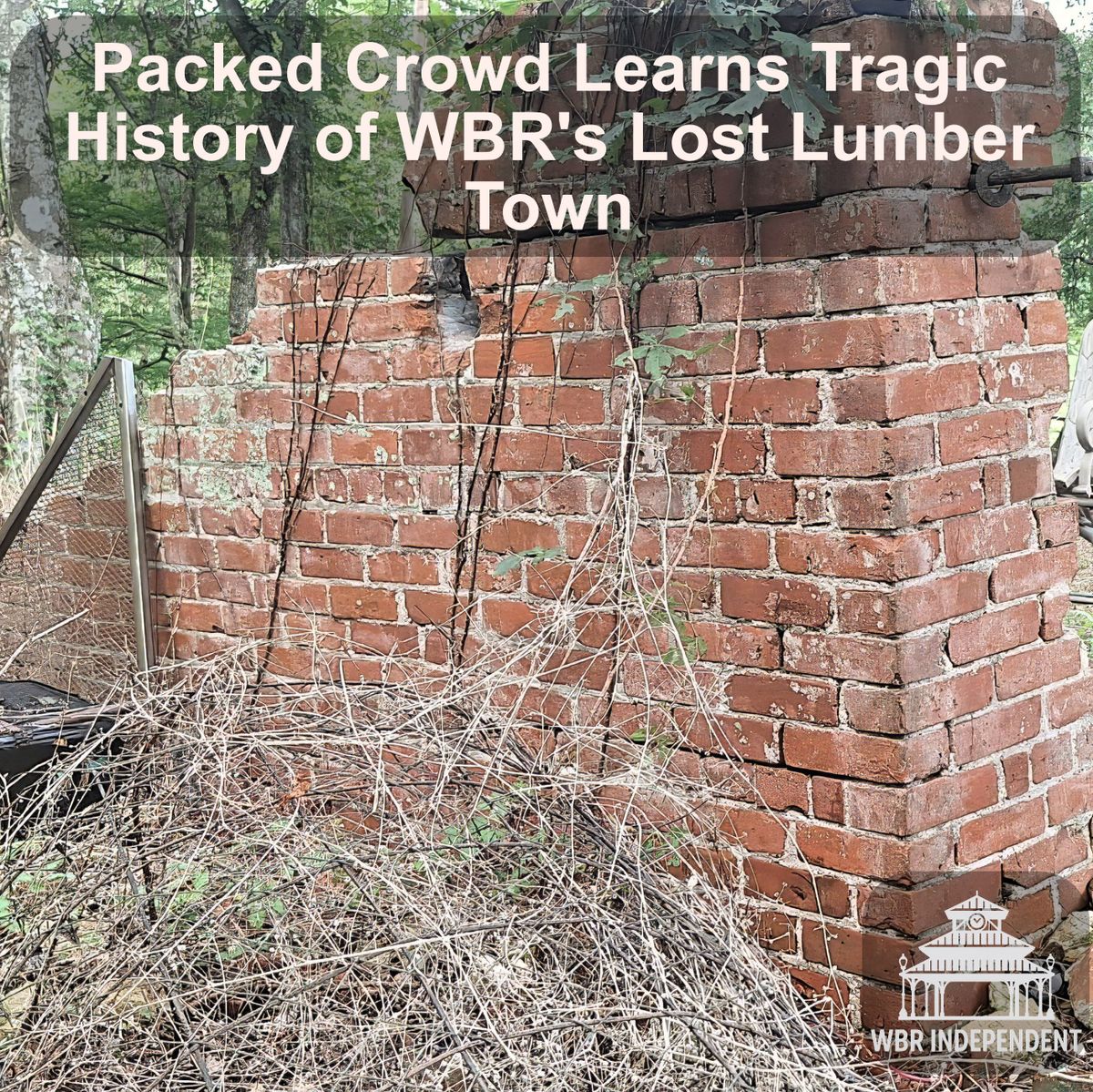
Today, virtually nothing remains of the once-bustling community. The land is privately owned hunting club property. Only scattered concrete foundations and brick fragments from the mill's boiler room remain, and the railroad bridge crossing the Intracoastal Waterway – still called Morley Bridge – mark where hundreds of families once lived and worked.
Hebert displayed artifacts he collected as a child while walking through the woods where the town stood – bottles, electrical insulators, and other remnants of a community that Mother Nature has reclaimed.
Community Response
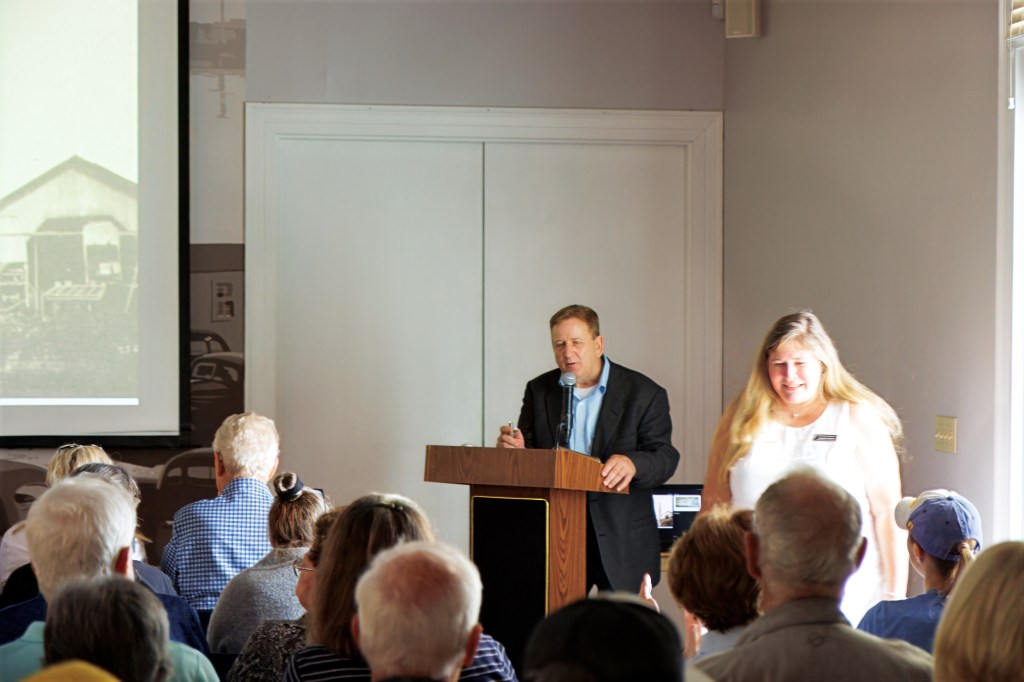
The presentation drew an enthusiastic response from the packed museum audience, with many staying afterward to examine historical artifacts and discuss potential family connections to the lost town.
"It's fascinating that hundreds of people lived there, that there were houses and buildings, and now it's just nothing," Hebert reflected. "I became a little obsessed with preserving this history."
The West Baton Rouge Museum houses additional Morley artifacts, including items donated in 2011 from archaeological surveys of the town site, such as a name plate from Mrs. Woodcock's trunk used during her voyage from England – she was the wife of Morley's commissary manager, and the mother of the man who drove students from Morley to school in Brusly.
The presentation highlighted the museum's ongoing partnership with the West Baton Rouge Genealogical Society to preserve and share the parish's rich but sometimes forgotten history.
The next museum program features Creole Louisiana history. For information about upcoming events, contact the West Baton Rouge Museum at (225) 336-2422.