St. Francis Hall Fundraising Nears Goal as Music Director Details Space Crisis
$137,000 pledged toward renovation; choir conflicts and catechism scheduling drive preservation urgency
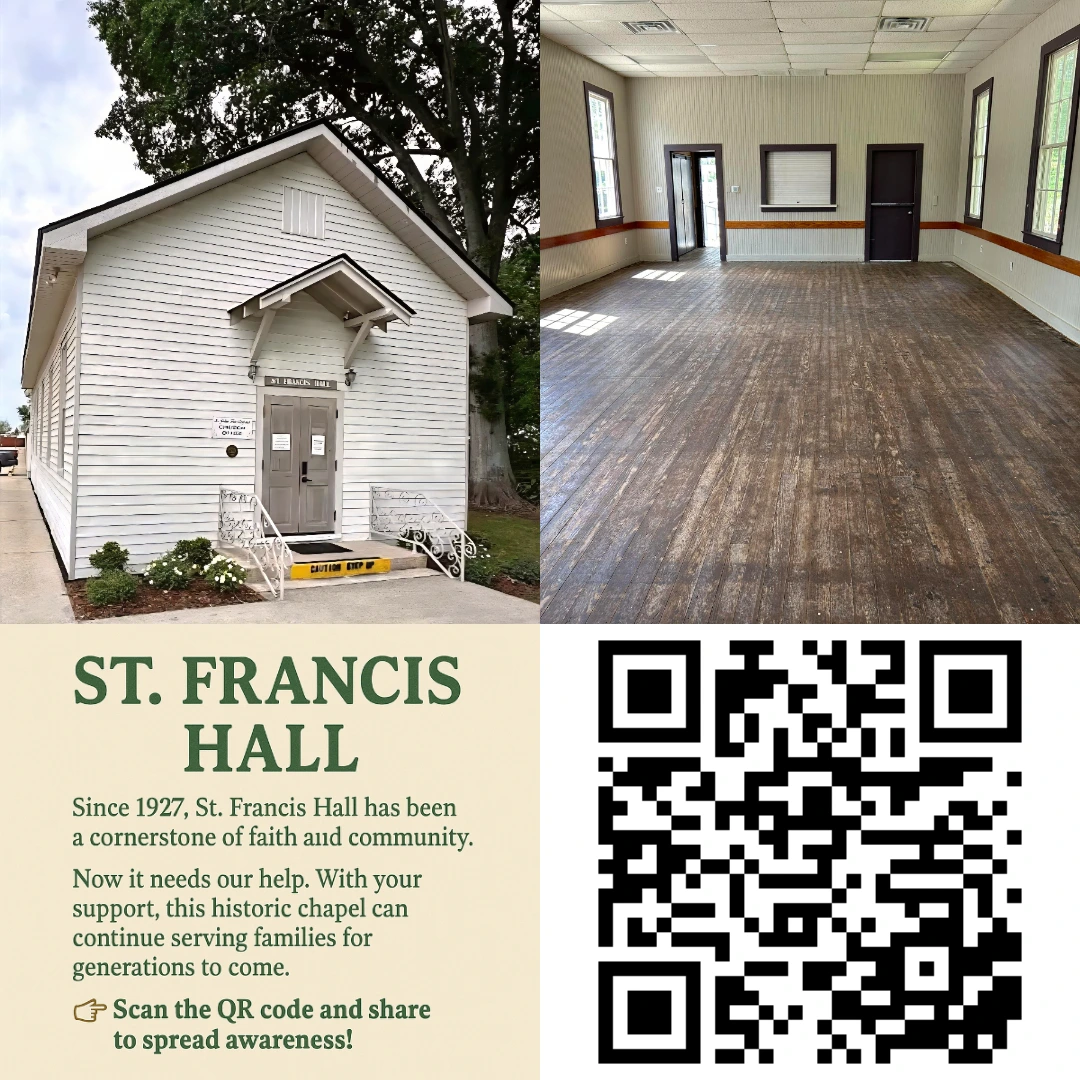
BRUSLY — One Month after descendants launched a campaign to save St. Francis Hall from demolition, fundraising has reached $137,000 toward a project now estimated between $120,000 and $160,000, depending on how extensively the century-old building is restored.
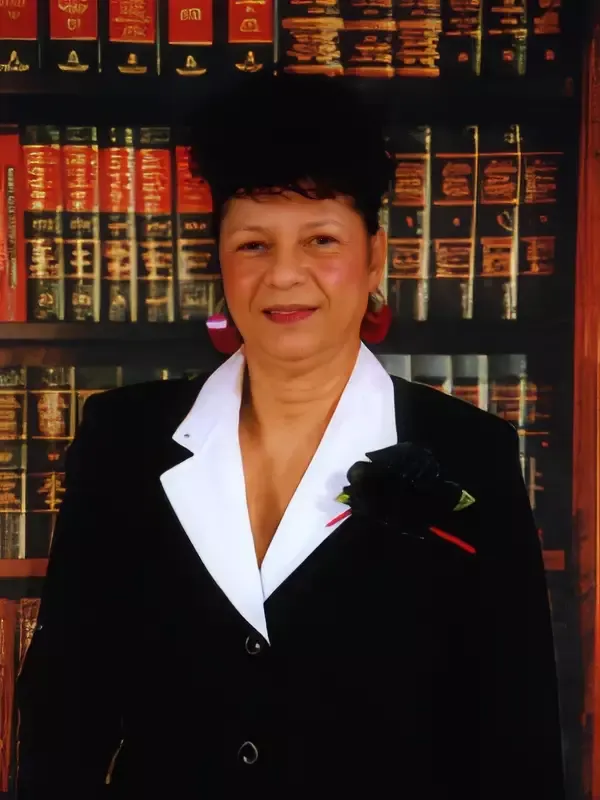
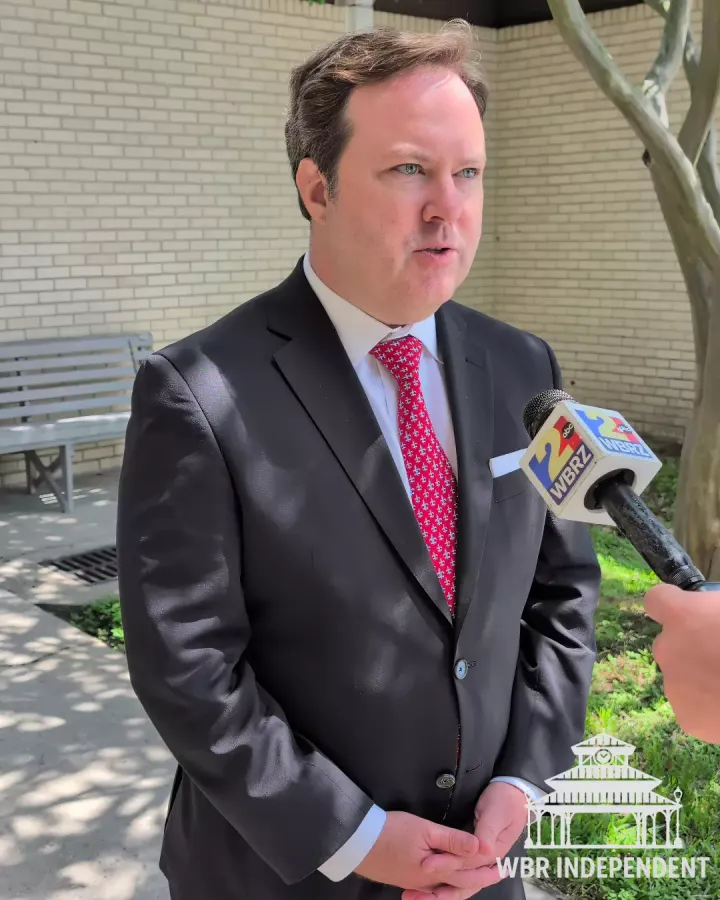
At a September 30th meeting, organizers received detailed cost estimates from contractor Chris Ward and Brian Falcon, an independent architect and parishioner, while music director Sharon Thibodeaux presented operational challenges that underscore why the church needs additional space beyond preservation sentiment.
Space Conflicts Disrupt Music Program
Thibodeaux, who has led music at St. John the Baptist for one year, described recurring conflicts where choir rehearsals clash with rosary services, catechism classes, and parishioners seeking quiet prayer time before Mass.
"Several times my musicians have been coming in kind of hushed and kicked off because they said there's a rosary being done before Mass or people praying before Mass," Thibodeaux told the group. Musicians hired for special services need to practice with the organist before Mass begins, but the church is already occupied.
The scheduling problems have forced creative workarounds. "In the past, I had to bring my own personal keyboards and drag down all those books and bags, hoping that I had books for everybody in choir, pull out chairs, have everybody seated, and have a rehearsal in the office," she said. "We actually had to have instrumentalists come, and we were shoved in the office with violins and everything."
Adult choir rehearsals would use the renovated building weekly, with children's choir adding monthly practices. During Christmas and special occasions, rehearsals could occur twice weekly.
Thibodeaux plans to donate a Schaeffer & Sons upright studio piano that belonged to her father, providing a permanent instrument for the space. Father gave verbal approval for music program use, though she acknowledged needing formal presentation to the church's parish council.
Cost Estimates Finalized
Ward's estimates show the project is financially achievable with current pledges:
- Basic restoration: $120,000-$140,000 including building move ($21,000), foundation work, new handicap-accessible bathroom and storage, mechanical systems, and exterior preservation
- Original ceiling restoration: Additional $10,000-$20,000 to remove drop ceiling and restore hidden plank ceiling, depending on available funding
"If we get up to that $150,000, $160,000 mark, then I think the ceiling is a real possibility," Ward said.
The estimates assume volunteer labor from various trades. Brian Falcon, an independent architect and parishioner, has documented the building extensively and presented detailed renovation plans to the group. Matt Daigrepont of Fusion Architecture is donating professional architectural services, with the parish only paying fees for mechanical, electrical, and plumbing engineers.
The parish agreed to clear access roads at no charge, eliminating $16,500 in bush-hogging costs from earlier estimates.
Architectural Preservation Details
Falcon's detailed documentation reveals significant historic features worth preserving. The building sits on hand-hewn seven-inch by eight-inch wood sills showing mortise and tenon joinery, indicating they were salvaged from an earlier structure.
"We never have figured out exactly the history of the building," Falcon explained. "But we think the original chapel was either torn down or dismantled and rebuilt at Sardine Point, or this was built new at Sardine Point. But they definitely used older material. The sills, for sure."
The structure uses real two-by lumber throughout—two-by-eight floor joists, two-by-six ceiling rafters, two-by-eight ceiling joists, and two-by-four studs, all on a two-foot module. The original floor, uncovered during asbestos abatement, has been so well-received that planners now hope to sand and seal it rather than cover it with new materials.
A hidden plank ceiling exists above the current drop ceiling at 11 feet, with the original ceiling reaching 13 feet. Restoring it would require working around a four-foot by eight-foot hole cut when air conditioning was installed, plus additional register openings.
Diocese Process and Timeline
The project must navigate diocese approval requirements including multiple contractor bids and formal architectural review—a process that typically extends timelines considerably.
"It always takes longer when you've got, you know, diocese involved and the permit offices and bidding and all that stuff," Falcon explained.
The diocese doesn't force parishes to demolish buildings, but does require financial analysis of projects. Falcon noted the diocese "recognizes value" when communities demonstrate commitment to historic preservation.
The building must be moved by December to accommodate the new education building construction schedule.
Awareness Challenges
Multiple meeting participants reported that many parishioners remain unaware of the preservation effort. Three parishioners who toured the building after seeing restored floors "were surprised to even see that. And they did not know we were collecting pledges or trying to renovate," according to one organizer.
The group discussed strategies to increase parish awareness:
- Requesting announcement time after all Masses
- Installing a banner outside the chapel to draw parishioners' attention and invite tours
- Publishing bulletin notices
- Organizing building tours between Masses
The challenge, one participant noted, is that parishioners often don't see information posted inside the church because they come for Mass and leave without reading bulletin boards or notices. A visible banner outside the building could catch their attention as they walk to and from the main church.
The Pledge Collection Challenge
While $137,000 represents strong community support, organizers emphasized these are pledges that still need collection. "Remember, it's a pledge. We've got to collect the money now, you know," L.J. Dupuy told the group. "And I can tell you that's not going to be easy."
The collection challenge stems from the informal pledge process. Some who verbally committed may reduce contributions when formal collection begins. Dupuy cited examples: "Look, we'll put $1,500 on it, you know. But then when you go there to get that pledge, put it on the computer, we're going to give you a dollar."
To address this uncertainty, organizers plan to continue fundraising well beyond the minimum needed, creating buffer for any pledges that don't materialize.
Tax Advantages for Donors
Contributions qualify as tax-deductible donations to St. John the Baptist Catholic Church's building fund. Under current tax law, donors can deduct up to $108,000 when funds transfer directly from retirement accounts to the 501(c)(3) organization, with the transfer counting toward required minimum distributions without generating taxable income.
Checks should specify "St. John the Baptist Catholic Church, Building Fund, St. Francis Hall" to ensure proper allocation.
October 9th Decision Point
The church's parish council at St. John the Baptist Catholic Church meets October 9th to consider the project. Even with council approval, organizers plan continued fundraising.
"After the 9th, we're going to keep on then until we get to what we want to make this a really outstanding part of the campus over there. Useful for all of us," Dupuy said.
Beyond music program needs, organizers envision the space serving homeschool families (who currently lack facilities), youth confirmation programs, and community activities that would keep young people connected to the parish.
The September 30th meeting concluded with Dylan Seaman, who works with Thibodeaux in the music program, performing two songs that demonstrated the musical talent the preservation effort aims to support.
How to Help
Fundraising continues through direct contact with organizers. For more information about contributing to the preservation effort, contact L.J. Dupuy or other preservation committee members through St. John the Baptist Catholic Church.
The October 9th meeting of the church's parish council will determine whether the project moves forward to the diocese approval process.
This article is based on the September 30, 2025 preservation committee meeting and builds on WBR Independent's ongoing coverage of the St. Francis Hall preservation effort.