WBR Resident Files Lawsuit Challenging Louisiana's Voting Machines as Unconstitutional
A West Baton Rouge Parish man who serves on the parish's Board of Election Supervisors filed suit Tuesday against Louisiana's top election officials, arguing that the state's paperless electronic voting machines violate the Louisiana Constitution's requirement that votes be counted publicly.
BATON ROUGE — Philip A. Callais, a West Baton Rouge Parish resident and member of the parish's Board of Election Supervisors, filed a lawsuit Tuesday in the 19th Judicial District Court seeking to have Louisiana's current voting system declared unconstitutional.
The suit, Case No. C-753349 Section 27, names Louisiana Secretary of State Nancy Landry and Commissioner of Elections Sherri Wharton Hadskey as defendants. Attorney General Liz Murrill was also served. Callais is represented by Baton Rouge attorney Jeffrey S. Wittenbrink of the Wittenbrink Law Firm.
The Secretary of State's office and the Commissioner of Elections did not provide comment before publication. The Attorney General's office, which was served as a party to the suit, referred questions to the Secretary of State's office.
The Core Argument
The lawsuit centers on Article XI, Section 2 of the Louisiana Constitution, which requires that ballots "shall be counted publicly and preserved inviolate" until any election contests are resolved.
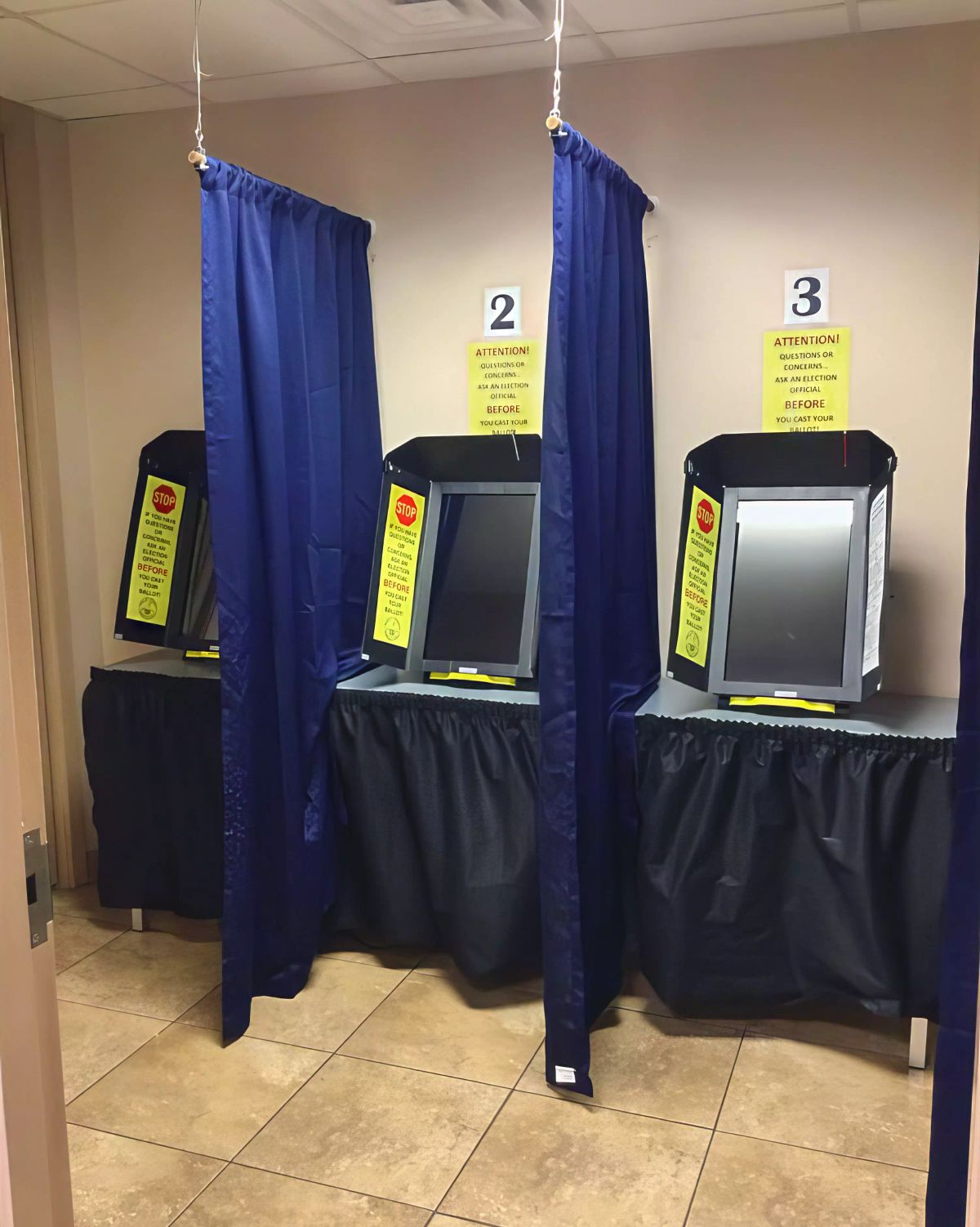
Louisiana currently uses Direct Recording Electronic, or DRE, voting machines across the state. Those machines record and tabulate votes entirely within a proprietary software system. Wittenbrink said the software is inaccessible to the public — and, he argues, to state officials as well — once the machines are placed into service.
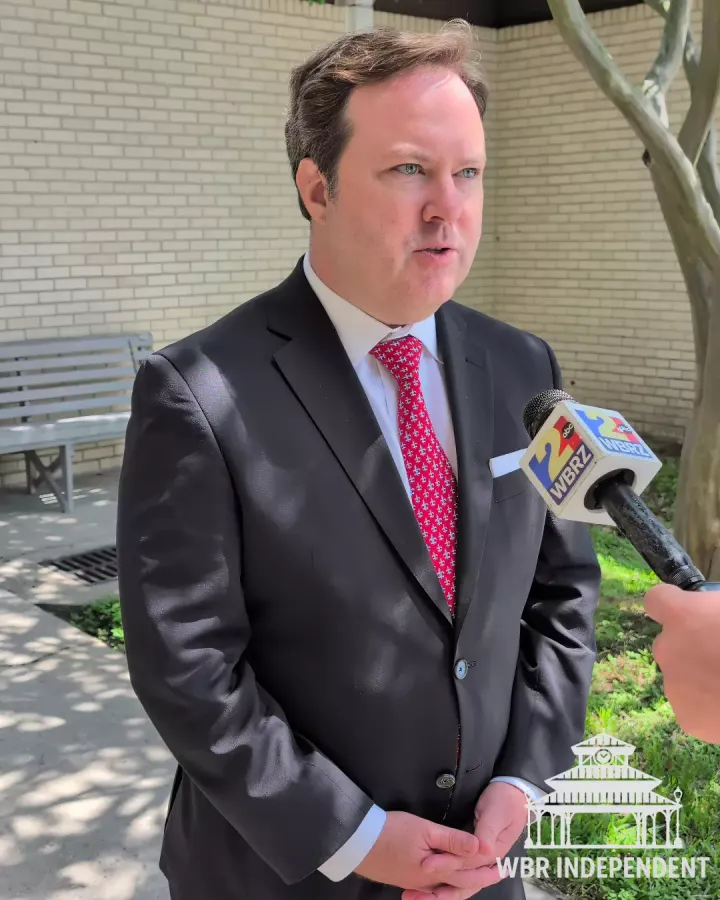
"Your vote goes into a black box, the results come out of the black box, and you don't get to know how it got there," Wittenbrink said in a phone interview Tuesday. "You don't get to see the mechanism, you don't get to see the algorithm — so it's not public at all."
The petition further argues that because no paper record of individual voter intent exists, there is no way to recount or independently verify results — making it impossible for elections to meet the constitutional standard of ballots being "preserved inviolate."
"You cannot go back to any piece of evidence and discern a voter's intent — who they meant to vote for, what they meant to vote for," Wittenbrink said. "It cannot be recounted."
The petition states that Louisiana is the only state in the country that uses DRE machines without a paper ballot backup in statewide elections.
A Recent Case Illustrates the Problem
The lawsuit points to a Caddo Parish sheriff's race as a real-world example. In Nickelson v. Whitehorn et al. (2023), the election was decided by a single vote. When the result was contested, only absentee paper ballots — a small fraction of total votes cast — could be recounted. Several errors were found among those ballots, ultimately requiring a new election. The vast majority of votes, cast on DRE machines, could not be reviewed.
"We're the only state in the Union that does that," Wittenbrink said, "and it's plainly and cleanly against the Constitution of the state."
The Local Angle
Callais's standing to bring the lawsuit is rooted in his role in West Baton Rouge Parish. As a member of the WBR Board of Election Supervisors — a position he holds by statute as Chair of the WBR Parish Republican Executive Committee — he is legally required to supervise, conduct, and certify election results in the parish.
Wittenbrink said his client cannot fulfill that duty in good faith under the current system.
"He has to certify those votes — and right now, he's not able to sign off on them, because once a vote goes into the black box, he doesn't know what it really means," Wittenbrink said.
A Previous Lawsuit Was Dismissed on Procedural Grounds
This is not the first legal challenge. Wittenbrink said a similar suit was filed in 2024 but was dismissed after the court ruled that the Attorney General — whose office was required to be served under a newly enacted statute — had not been properly notified. The current filing corrects that deficiency and expands the claims to include enforcement of Act 500.
What the Lawsuit Is Asking For
The plaintiffs are seeking a court declaration that Louisiana's DRE system is constitutionally inoperable and an order blocking state officials from conducting elections that do not comply with the public counting requirement.
State law already provides for paper ballots and hand counting in the event voting machines are declared inoperable. The petition argues the constitutional deficiency of the current machines places the state in exactly that situation.
"It's amazingly easy to count paper ballots," Wittenbrink said. "You count them one at a time. You could do it at the local precinct. Everybody knows the people that are there — you have much more control and security over the vote."
The suit also asks the court to compel enforcement of Act 500, which requires proof of citizenship for first-time voter registrations. Wittenbrink said the law took effect January 1, 2025, but has not been implemented.
"The law says a voter shall, when applying to register, produce evidence of their citizenship — it's mandatory language that is not being enforced whatsoever," he said. "There's a little checkbox, you say yes, I'm a citizen, and there's no proof required."
The Cybersecurity Context
The filing also cites Louisiana's ongoing cybersecurity vulnerabilities as a compounding concern. Executive orders declaring a statewide cybersecurity emergency have been in effect since December 2023. The 19th JDC Courthouse itself — where election records are transmitted to the Secretary of State — suffered a cyber incident in August 2024.
Wittenbrink noted that the state's voter rolls are sourced from DMV records, which have also been the subject of a cyberattack. He argued that the vulnerability created by paperless electronic voting would be eliminated if the constitutional provisions were followed.
Timeline
Wittenbrink said he has requested expedited consideration and hopes to obtain a ruling before the November 2026 federal midterm elections.
"We'd like to get something in place so that action has to be taken at least before the November elections," he said. "Every election is important, but those are the important national elections."
The case is pending before Judge Johnell Matthews (Pro Tempore), Section 27, 19th Judicial District Court.
Jeffrey S. Wittenbrink can be reached at (225) 308-6850 or jwittenbrink@TheLawyerBR.com. Philip Callais can be reached at 225-776-3004.
WBR Independent sought comment from the Louisiana Secretary of State's office, the Commissioner of Elections, and the Attorney General's office. This story will be updated if responses are received.
Published Tuesday, March 17, 2026 | By John Summers | WBR Independent